1 July ore 12:00 – 12:30 CEST
Archivio Arte Contemporanea
329 4828149
https://www.stefanogiovanazzi.eu
info@stefanogiovanazzi.eu
1 July ore 12:00 – 12:30 CEST
Archivio Arte Contemporanea
329 4828149
https://www.stefanogiovanazzi.eu
info@stefanogiovanazzi.eu
video call
2 July ore 17:30 – 18:00 CEST
Archivorum
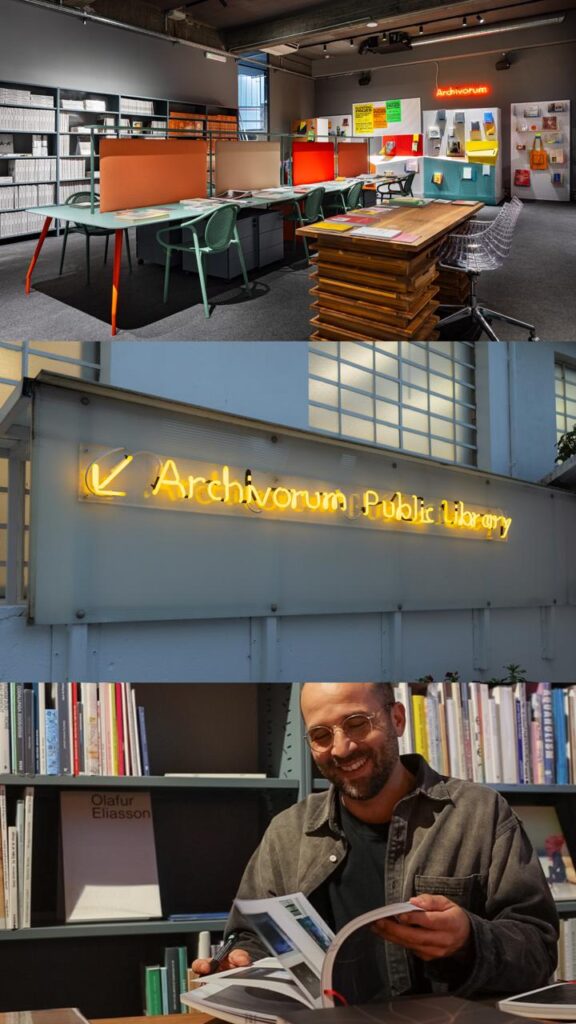
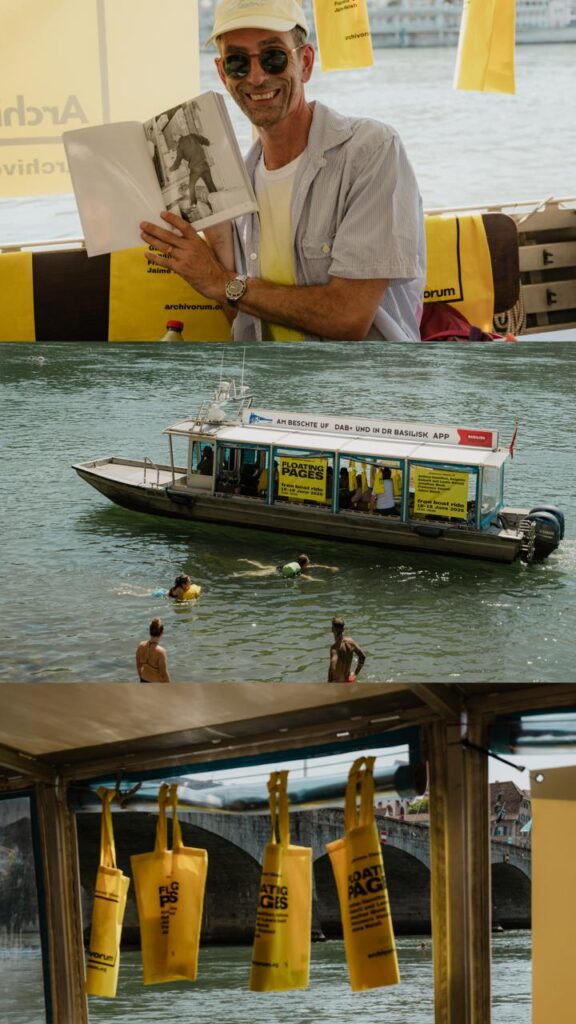
Archivorum is an international platform dedicated to the preservation, activation, and transmission of artist archives through research, publishing, and education. Founded in Luxembourg by the passionate art lover Mia Rigo, Archivorum was created with the aim of rethinking the archive as a living, continuously evolving structure rather than a static repository of the past. The name derives from the Latin term for “archive,” reflecting a commitment to preservation that actively dialogues with the present and future. Growing up in Modena, Mia was always surrounded by books; her mother played a key role in opening many libraries in the city. The story of Archivorum begins with a poem by Oriol, dedicated to the “disappointment of the collector” — the pain of seeing works once loved become dispersed and forgotten. That poem became a vow. Mia transformed that feeling into a mission: to ensure that artists and their creations are remembered through their own voices, not just through others’ narratives. From this conviction, Archivorum was born—a non-profit public association dedicated to preserving artists’ legacies through their words, books, and testimonies—so that memory continues to live as a conversation between generations, and not just an echo of the past. Archivorum was created from the desire to let artists speak with their own words, ensuring that their voices, along with their works, can endure over time. Mia envisioned a more open and dynamic view of the archive: a structure that supports artists and helps them carry forward their work and ideas over time. Archivorum operates as a platform that supports artists in safeguarding, activating, and transmitting their legacies through research, publishing, and training. Rather than fixing works and narratives, Archivorum aims to keep them moving—accessible, evolving, and meaningful across generations.
Archivio Arte Contemporanea
329 4828149
https://www.stefanogiovanazzi.eu
info@stefanogiovanazzi.eu
30 June ore 10:00 – 2 July ore 10:00 CEST
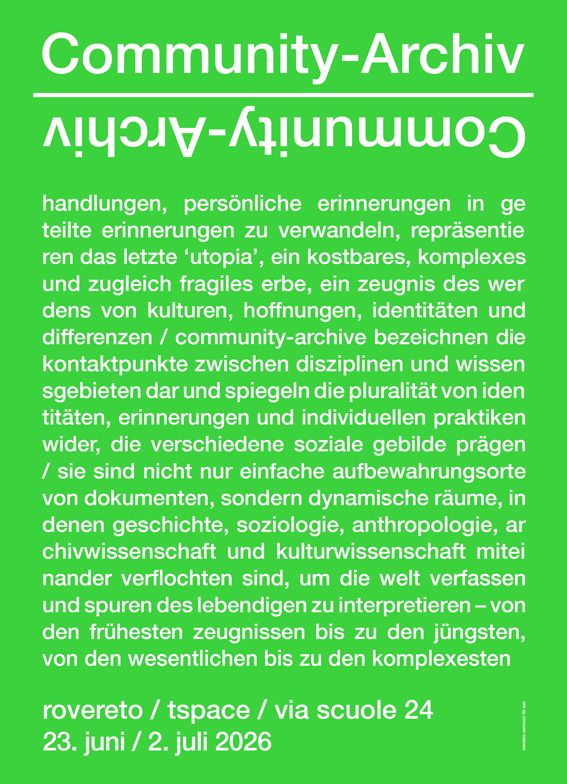
“Community Archives Pantone 802 U,” in German, is the third manifesto created by Maurizio Nannucci for ‘Archivi di Comunità.’ Printed on handmade paper in a limited edition of 200 copies, it is distributed free of charge to the public in the gallery.
Archivio Arte Contemporanea
329 4828149
https://www.stefanogiovanazzi.eu
info@stefanogiovanazzi.eu
1 July ore 17:30 – 18:00 CEST
« This video is stunning. The perfect intertwining of two worlds, so distant and yet so close, containing within them millions of lives, thoughts. I can’t even explain what this work evokes in me: so many things. Beautiful » Clementina Dal Bosco
“Archivi di Comunità” hosts a work by Francesco Dal Bosco titled “Doppia Natura Morta,” a two-channel stereo video lasting 20 minutes, created in 2003. The piece will be presented by Michele Dal Bosco, Francesco’s son.
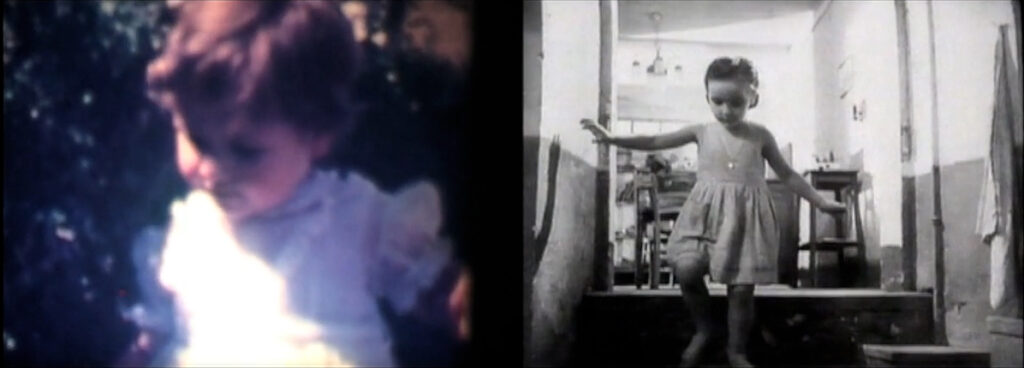
Michele Dal Bosco
Michele Dal Bosco is a Trentino-born director, musician, and artist. He has participated in the organization of international exhibitions (Max Ernst, Leonardo da Vinci, Rubens, Raffaello, Olivetti, Depero, Giotto, Chagall, Miró, Donatello, Tintoretto) and has collaborated with various cultural institutions, including the Gioachino Rossini National Museum.
Francesco Dal Bosco
Francesco Dal Bosco (Trento, August 26, 1955 – Trento, January 9, 2019) was an Italian filmmaker, screenwriter, and producer. From 1976 to 1983, in partnership with Fabrizio Varesco, he was a leading figure in the Italian avant-garde theater scene, creating numerous performances in theaters and art galleries across Italy and Europe, including Beat ’72 at the National Gallery of Modern Art, Palazzo delle Esposizioni in Rome; Out-Off at the Brera Academy, Sforza Castle in Milan; and the Institute of Contemporary Art in London. In 1982, he was one of the founders of the Rome-based cooperative Missione Impossibile, which organized the festival “Ladri di Cinema” in the same year. Also in 1982, he shot the feature film La notte che vola in three days in Bologna, which was presented at the Salsomaggiore Terme Film Meetings and at Rotterdam. This film won the Best Research Film award at the Milano Filmmaker Festival and was screened at the Cinémathèque Française in Paris. In 1991, he directed La camera da letto, a three-hour film co-directed with Stefano Consiglio, featuring Attilio Bertolucci reading his poem of the same name in front of the camera. The film was shown at the Venice Film Festival in 1992 over four evenings and was broadcast on RAI3’s Fuori Orario, in a nonstop program that lasted an entire night. In 1993, he directed the video Francis Bacon, broadcast on RAI1 and published on VHS by Electa. In 1994, he created the video 23 Songs from the Home, presented at the Venice Film Festival and at the Cultural Institute of Toronto (Canada) in the same year. In 1995, together with Daniele Costantini, he published the book-interview Nuovo Cinema Inferno on Dario Argento’s cinema, published by Pratiche Editrice. In 2001, he participated in festivals in Berlin, Edinburgh, Brisbane, Singapore, and Manila with the feature film Commesso Viaggiatore, starring Claudio Bigagli and Maddalena Crippa. In 2003, he directed the documentary Jackson Song, the official video for Jackson Pollock’s exhibition at the Correr Museum in Venice. In 2005 and 2006, he filmed readings of Lawrence Ferlinghetti and Jack Hirschman for the Cultural Services Center of S. Chiara in Trento. Also in 2006, he presented the video Niente è Vero Tutto è Permesso at the Pesaro Film Festival. In 2008, he made the film Apocalisse in Rome, which was shown at the Religion Today Film Festival in Trento and at CINESPI in Louvain-la-Neuve, Belgium. In 2012, he co-directed with Stefano Consiglio the documentary Il Centro, produced with BiBi Film in Rome and RAI3.
FILM AND VIDEO. PARTIAL FILMOGRAPHY
STANZE, 1980, Super8mm, Collective for Living Cinema, New York. LA NOTTE CHE VOLA (The Flying Night), 1982, 16mm, B&W, 85’, produced by Missione Impossibile. Salsomaggiore Film Festival 1982, Milano Filmmaker 1983, Cinémathèque Française Henri Langlois 1983, Rotterdam Festival 1983, Paris 1983; broadcast by RAI3. FOGLIE MORTE (Dead Leaves), 1984, Video, Color, 30’, produced by Francesco Dal Bosco. Salsomaggiore Festival 1984, Filmmaker Milano 1985, Locarno Film and Video Festival 1985 TRAMONTO ROSSO (Red Sunset), 1985, 16mm, B&W, 86’, produced by Missione Impossibile. Salsomaggiore Festival 1985, Filmmaker Milano 1985, Bellaria Festival 1985 LA CAMERA DA LETTO (The Bedroom), 1992, Video, Color, 540’, produced by The Film Company (co-directed with Stefano Consiglio). 49a Venice Film Festival 1992, Prix Italia, Parma 1992; broadcast by RAI1 and RAI3 FRANCIS BACON, 1993, Video, Color, 40’, produced by Film Work. Museo d’Arte Moderna, Lugano. “Francis Bacon” 1993, broadcast by RAI1 23 SONGS FROM THE HOME, 1994 Video, Color, 40’, produced by Film Work. 49a Venice Film Festival 1994, Italian Cultural Institute, Toronto 1994, Arcipelago Festival 1995 STATO DI QUIETE (State of Quiet), 1996 Video, Color, 80’, produced by Francesco Dal Bosco Studio; International Mountain Festival, Trento 1998 FANTASMA (Ghost), 1997 Video, Color, 60’, produced by Francesco Dal Bosco Studio. Senzatitolo Festival, Rovereto (TN) 1997, Civic Gallery of Contemporary Art, Trento 2001 IL CORO (The Chorus), 1997 Video, Color, 65’, produced by Francesco Dal Bosco Studio. International Mountain Festival, Trento 1998 COMMESSO VIAGGIATORE (Traveling Salesman), 2000 35mm, B&W/Color, 95’, produced by Monti Pallidi Film Festival, Berlin International 2001, Edinburgh International 2001, Brisbane International 2001, Singapore International 2002, Manila International 2002, “Discovering the New Italian Cinema” New York 2004; broadcast by SKY JACKSON SONG, 2002 Video, Color, 45’, produced by Francesco Dal Bosco Studio. Palazzo Correr, Venice; “Jackson Pollock” April-June 2002; Palazzo Venezia Festival 2004 LIGHT OF THE DEAD, 2002 Video, Color, 13’, produced by Francesco Dal Bosco Studio. Galleria Civica d’Arte Contemporanea, “Words, Words, Words” Trento 2002 FRAGILE (Voices from the Theater after September 11), 2002 Video, Color, 85’, produced by Francesco Dal Bosco Studio/Centro S. Chiara Trento. Piazza Duomo, September 11, 2002 DOPPIA NATURA MORTA (Double Still Life), 2003 Color, Video, 2 channels, 18’ TOLEDO, 2004 Video, B&W, 17’, produced by Francesco Dal Bosco Studio. MAN Museum of Contemporary Art Nuoro, “(In)visible-(In)corporeal” July-September 2005 Strade Bianche (White Roads), Casale Marittimo (Pistoia), July 2006 MIRACLE, 2004 Video, Color, 4’, produced by Francesco Dal Bosco Studio. Galleria Civica d’Arte Contemporanea, Trento June 2005 SEIZERO/SEINOVE, 2005 Video, Color, 3’, produced by Francesco Dal Bosco Studio. Riva del Garda Civic Museum, “The Sixties. Costume and Society,” May-October 2005 CORRENTE CONTINUA (Direct Current), 2005 Video, Color, 73’, produced by Francesco Dal Bosco Studio/Province of Trento NIENTE È VERO TUTTO È PERMESSO (Nothing is True, Everything is Permitted), 2005 Video, Color, 39’, produced by Francesco Dal Bosco Studio; Pesaro New Cinema Festival 2006 L’ORA AZZURRA DELL’OMBRA (The Blue Hour of the Shadow), 2007 Video, Color, 67’, Francesco Dal Bosco Studio / Autonomous Province of Trento. APOCALISSE, 2010, Video, Color, 88’, Produced by Francesco Dal Bosco Studio; Religion Today Festival Trento 2010; CINESPI Louvain-La-Neuve (Belgium) 2010. THE ARTIST’S WORK, 2011, Video, Color, 64’, Produced by Francesco Dal Bosco Studio; (La Magnifica Ossessione) Mart, Rovereto 2013. THE CENTER, 2012, Video, Color, 70’, Produced by Francesco Dal Bosco Studio and BiBi Film (directed by Stefano Consiglio); Bologna, Cinema sotto le stelle 2013; broadcasted by RAI3. AMNESIA (THE DEAD RETURN), 2014, Video, 30’, Produced by Francesco Dal Bosco Studio, Wurmkos Gallery, Sesto San Giovanni (MI).
Archivio Arte Contemporanea
329 4828149
https://www.stefanogiovanazzi.eu
info@stefanogiovanazzi.eu
4 July ore 10:00 – 11:00 CEST
The Miniscalchi-Erizzo Museum, home of the eponymous Foundation established in 1964, is located in a complex of buildings with a late medieval layout in the heart of Verona, between Piazza delle Erbe and the Cathedral. Its diverse collection includes fossils, Etruscan and Roman artifacts, paintings, ancient drawings, sculptures, bronzes and plaques, as well as majolica, porcelain, antique furniture, weapons and armor, along with an impressive library and family archives. The collection has a layered history, being the result and consequence of the merging of collections from different families, and a fundamental component is what remains of the famous Wunderkammer created by the scholar Ludovico Moscardo from around 1630 to 1681. The presentation will primarily focus on the events related to this latter part of the collection, its partial dispersion, and the memories it still preserves and allows us to reconstruct.
Thomas Dalla Costa
Art historian and curator, Thomas Dalla Costa studied at the University of Verona, where he earned his PhD in 2012. In 2014, he served as Assistant Curator at the Castelvecchio Museum in Verona, and between 2019 and 2020, he worked as a Curatorial Fellow at the National Gallery in London. From 2022 to 2025, he has been working as an Associate Curator at the Miniscalchi-Erizzo Museum in Verona. He has curated and contributed to various exhibitions in Italy and abroad: Verona, Venice, London, Moscow, Madrid, Vienna. Thomas has received several research grants from international research organizations, including the Ermitage Italia Foundation, Save Venice Inc., and the Getty Museum (as part of The Getty Paper Project). He has published numerous articles in journals, books, and exhibition catalogs on topics such as the history of Venetian art criticism and painting from the 15th to 17th centuries; the organization of Venetian artistic workshops; and the use and function of drawing in the creative processes of Venetian artists of the 15th and 16th centuries. Thomas is also involved in curating or co-curating volumes focusing on these themes, such as the recent Venetian Disegno. New Frontiers 1420-1620, edited with Maria Aresin (Paul Holberton Publishing, 2024), and the Catalogo ragionato dei disegni – Fondazione Museo Miniscalchi-Erizzo (Silvana Editoriale, 2025). Additionally, he authored the monograph Venere e Adone by Titian: Art, Culture, and Society between Venice and Europe (Marsilio, 2019). Currently, he is the scientific coordinator of research and exhibition activities related to the celebrations for the 450th anniversary of Titian’s death, a two-year project investigating the use and function of landscape in Cadorino art.
Archivio Arte Contemporanea
329 4828149
https://www.stefanogiovanazzi.eu
info@stefanogiovanazzi.eu
26 June ore 16:30 – 2 July ore 17:00 CEST
“Community Archives Pantone 807 U” is the second manifesto created by Maurizio Nannucci for ‘Community Archives’. Printed on off-white paper in a edition of 200 copies, it is distributed free of charge to the public in the exhibition space.
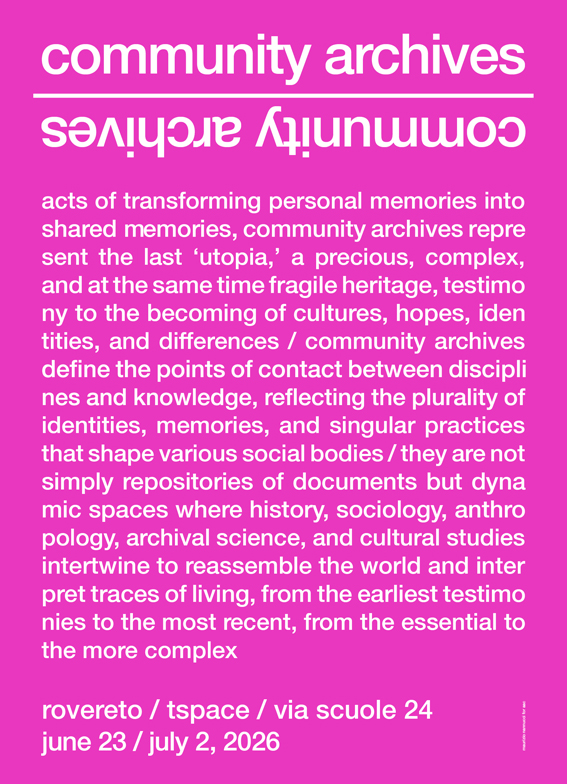
Maurizio Nannucci
Maurizio Nannucci, artist (Florence 1939). Maurizio Nannucci trained between Florence and Berlin and began his career in the mid-1960s in concrete poetry and electronic music, attending Pietro Grossi’s Studio di phonologia musicale S2FM (1965/1969). In 1965 Nannucci created the “Dattilogrammi” (Dactylograms), which were published in various anthologies, including Emmett Williams‘ “Anthology of Concrete Poetry” in 1967. He then participated in the exhibitions “Poesia concreta indirizzate concreti, visuali e fonetici,” organized by the Venice Biennale at Ca’ Giustinian in 1969, and in “Concrete Poesie?” at the Stedelijk Museum in Amsterdam in 1970. “Alfabetofonetico” inaugurated an anthology of neon texts still in progress, implementing a shift in the field of artistic intervention from the blank page to urban and architectural space, investigated in its primary structures to create dialectical tensions between its points of spatial definition (such as the floor, walls, and ceiling). In 1969 he created his first neon multiple, “box,” written in his own handwriting (a constant in his research) and intended for a box of multiples (“Multibox”) produced by the first self-managed and non-profit artists’ organization he co-founded in 1967 in Florence: the Centro ricerche estetiche F/uno. The work is emblematic of his research, not only for its technique, but also because it indicates his propensity to promote collective experiences, centered on a Situationist-inspired ethic of participation and action marginal to the official art system, which saw him open, also in Florence, the self-managed and non-profit spaces Zona (1974/1985) and Base (1998). With a view to creating a more streamlined system for the dissemination of ideas and for up-to-date and rapid information on experimentation, Nannucci edited the magazine «Mèla» (1976/1981) and published multiples, artist’s books, and ephemera by other artists, founding Exempla Editions with Mario Mariotti and Claudio Parmiggiani in 1970 (with which he had already published his own multiples and books since 1967), and the record label Recorthings in 1975. This sensitivity toward alternative publishing realities, politically marginal to the institution, emerged in the exhibition he curated at Zona in 1975, “Small Press Scene,” and was applied to the creation of a personal archive composed of thousands of documents “concerning any artistic marginal practice from the 1960s up to the present day,” a project that is an integral part of his artistic practice as a “great collective and personal diary” on the cultural identity of the second half of the twentieth century. His research has recently been presented at the MAXXI in Rome (Maurizio Nannucci. “Where to start from,” 2015), at the Museion in Bolzano, and at the Museo Marino Marini in Florence (Maurizio Nannucci. “Top Hundred,” 2015–2016).
Archivio Arte Contemporanea
329 4828149
https://www.stefanogiovanazzi.eu
info@stefanogiovanazzi.eu
Maurizio Nannucci will not be present at the event
23 June ore 10:00 – 2 July ore 18:00 CEST
Maurizio Nannucci was invited to exercise his distinctive style on the public image [brand identity] of the seemingly utopian project “Archivi di Comunità.” The visual proposal that emerged from this connects Archivi di Comunità to the idea of the ‘world’ as a place of ‘anomalous reflection’ – a line that ‘mirroringly’ reflects – and presents the proposed series of events as opportunities for testing, hypotheses of becoming, projects, promises, and deliveries as desires, states of mind, and forms of impermanent thought. The Archivi di Comunità Pantone 811 U manifesto, in Italian, printed on off-white paper in a 680 x 940 mm format using Pantone 811 U, will be distributed free of charge to the audience present in the room.
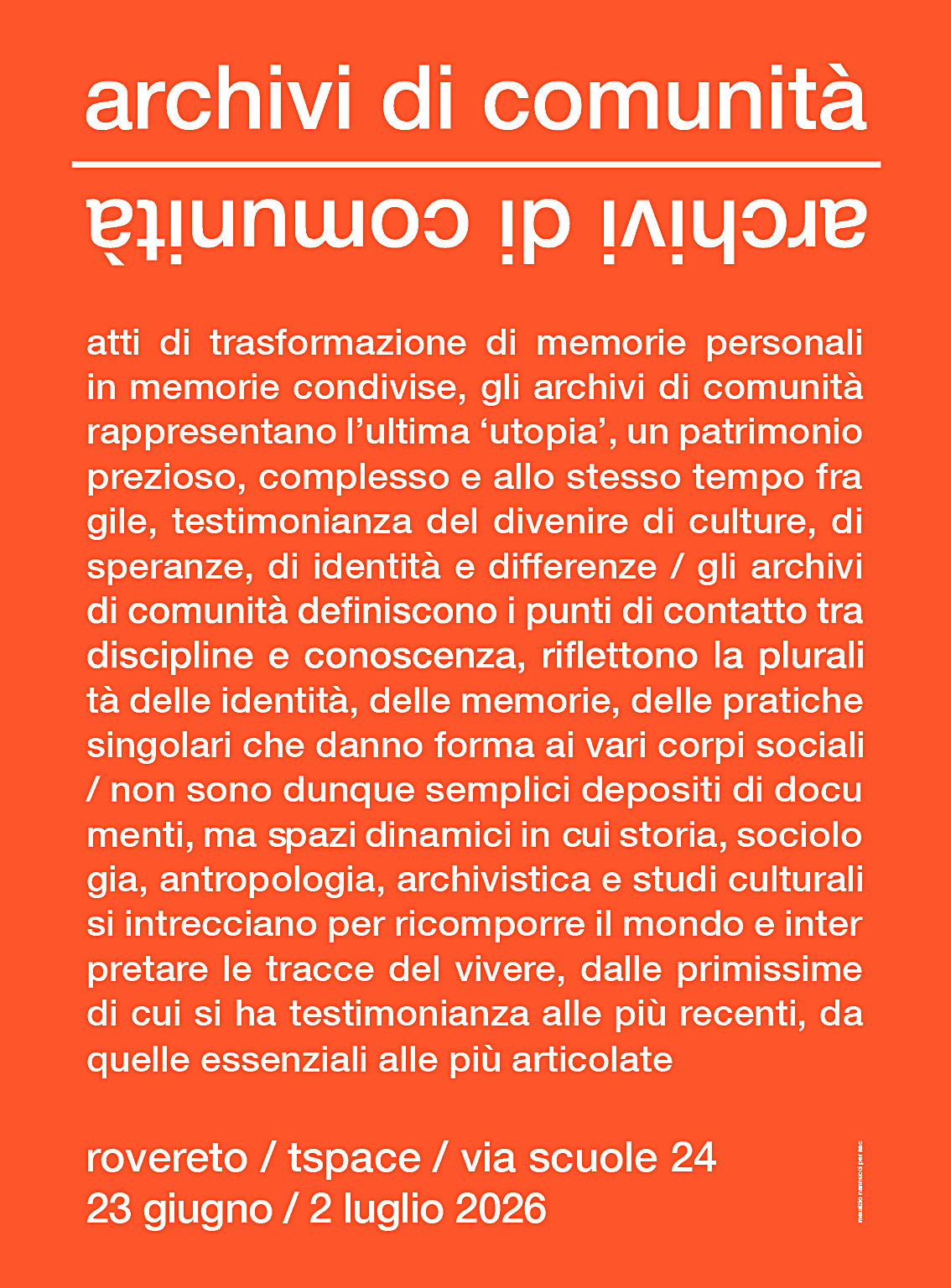
Zona Archives Zona non profit space
Florence 1974/1985. Founded in 1974 in Florence, Zona represents an unique example, of internationally recognized, non profit artist-run spaces. Situated in the historic quarter San Niccolò, Zona’s involvement with the experimental art movements of the 1970s and 1980s: multimedia art, concrete poetry, Conceptual art, performance, contrasted with the everyday life of the neighborhood. In accordance with its mission – o show interdisciplinary work on an international level – Zona’s program sought a crossover of experimental visual arts, music, architecture, and poetry. The aim of overcoming traditional borders between the disciplines was achieved through a radical, anti-academic organization, and through the confrontation of the audience with unusual insights into multifaceted art experiments and experiences that anticipated developments in the visual arts. Zona’s activities included more than 250 exhibitions/events as well as Zona publications and editions. In 1981 ZonaRadio went online, broadcasting new music and sound by artists.
“Zona People” formed a flexible collective, without long term programming. Flexibility was important as there was no financial support either from private sponsors or from public institutions. Zona’s program was completely self-financed by the members of the space. Zona built up an international network that promoted new art movements and opened up the possibility of a global exchange between artists, art critics, and the public. Founders: Maurizio Nannucci, Paolo Masi, Mario Mariotti, Giuseppe Chiari, Massimo Nannucci, Albert Mayr, Alberto Moretti, Gianni Pettena. Organization:
The nonprofit art space Zona was founded and organized by artists, musicians, poets, and architects, who were living and working in Florence. Mission: Creation of a global network of interdisciplinary art practices and exhibition of international experimental art in Florence. Program: Avant-garde art movements of the 1970s and 1980s, film and video, Conceptual art, Fluxus, performance, concrete and sound poetry, radical architecture, artists’ books and small press, audioworks, ZonaRadio.
Maurizio Nannucci
Maurizio Nannucci, artist (Florence 1939). Maurizio Nannucci trained between Florence and Berlin and began his career in the mid-1960s in concrete poetry and electronic music, attending Pietro Grossi’s Studio di phonologia musicale S2FM (1965/1969). In 1965 Nannucci created the “Dattilogrammi” (Dactylograms), which were published in various anthologies, including Emmett Williams‘ “Anthology of Concrete Poetry” in 1967. He then participated in the exhibitions “Poesia concreta indirizzate concreti, visuali e fonetici,” organized by the Venice Biennale at Ca’ Giustinian in 1969, and in “Concrete Poesie?” at the Stedelijk Museum in Amsterdam in 1970. “Alfabetofonetico” inaugurated an anthology of neon texts still in progress, implementing a shift in the field of artistic intervention from the blank page to urban and architectural space, investigated in its primary structures to create dialectical tensions between its points of spatial definition (such as the floor, walls, and ceiling). In 1969 he created his first neon multiple, “box,” written in his own handwriting (a constant in his research) and intended for a box of multiples (“Multibox”) produced by the first self-managed and non-profit artists’ organization he co-founded in 1967 in Florence: the Centro ricerche estetiche F/uno. The work is emblematic of his research, not only for its technique, but also because it indicates his propensity to promote collective experiences, centered on a Situationist-inspired ethic of participation and action marginal to the official art system, which saw him open, also in Florence, the self-managed and non-profit spaces Zona (1974/1985) and Base (1998). With a view to creating a more streamlined system for the dissemination of ideas and for up-to-date and rapid information on experimentation, Nannucci edited the magazine «Mèla» (1976/1981) and published multiples, artist’s books, and ephemera by other artists, founding Exempla Editions with Mario Mariotti and Claudio Parmiggiani in 1970 (with which he had already published his own multiples and books since 1967), and the record label Recorthings in 1975. This sensitivity toward alternative publishing realities, politically marginal to the institution, emerged in the exhibition he curated at Zona in 1975, “Small Press Scene,” and was applied to the creation of a personal archive composed of thousands of documents “concerning any artistic marginal practice from the 1960s up to the present day,” a project that is an integral part of his artistic practice as a “great collective and personal diary” on the cultural identity of the second half of the twentieth century. His research has recently been presented at the MAXXI in Rome (Maurizio Nannucci. “Where to start from,” 2015), at the Museion in Bolzano, and at the Museo Marino Marini in Florence (Maurizio Nannucci. “Top Hundred,” 2015–2016).
Archivio Arte Contemporanea
329 4828149
https://www.stefanogiovanazzi.eu
info@stefanogiovanazzi.eu
30 June ore 16:00 – 16:30 CEST
The intervention traces the experience of the Cineteca of the Fondazione Museo storico del Trentino, starting from a reflection on the transition from family film to community film, a path developed over nearly thirty years of activity involving archiving, historical research, and public dissemination. The archive of family films initially arose from the need to recover, safeguard, and digitize amateur reels in small formats — 8mm, Super8, and 16mm — preserved in Trentino families’ homes. From the early oral history projects and particularly with the experience of the Memorie di comunità, it became clear that these materials were not only private documents linked to family memory but also held a visual heritage capable of telling, in a remarkably direct way, the transformations of the territory and communities. Within these images, one finds landscapes now profoundly changed, vanished agricultural and forestry practices, moments of sociality, collective rituals, forms of work, and relationships that belong to the recent history of Trentino. Gradually, there emerged an awareness that these films told much more than the story of a single family: they narrated the history of a community. From this, the conceptual shift from family film to community film was born. This transition also redefined the role of the Cineteca, no longer seen solely as a place for conserving audiovisual materials, but as a relational space where archive, memory, and research meet. The true specificity of the Cineteca lies in the fact that the collections are never disconnected from the people, families, and communities that produced and safeguarded them over time. Through the work of collection, digitization, historical contextualization, and public sharing, images born in private contexts are brought back to life in the collective space, becoming historical sources and tools of public history. From this perspective, the Cineteca becomes not only a place of preservation but also a laboratory of knowledge and shared storytelling of the territory.
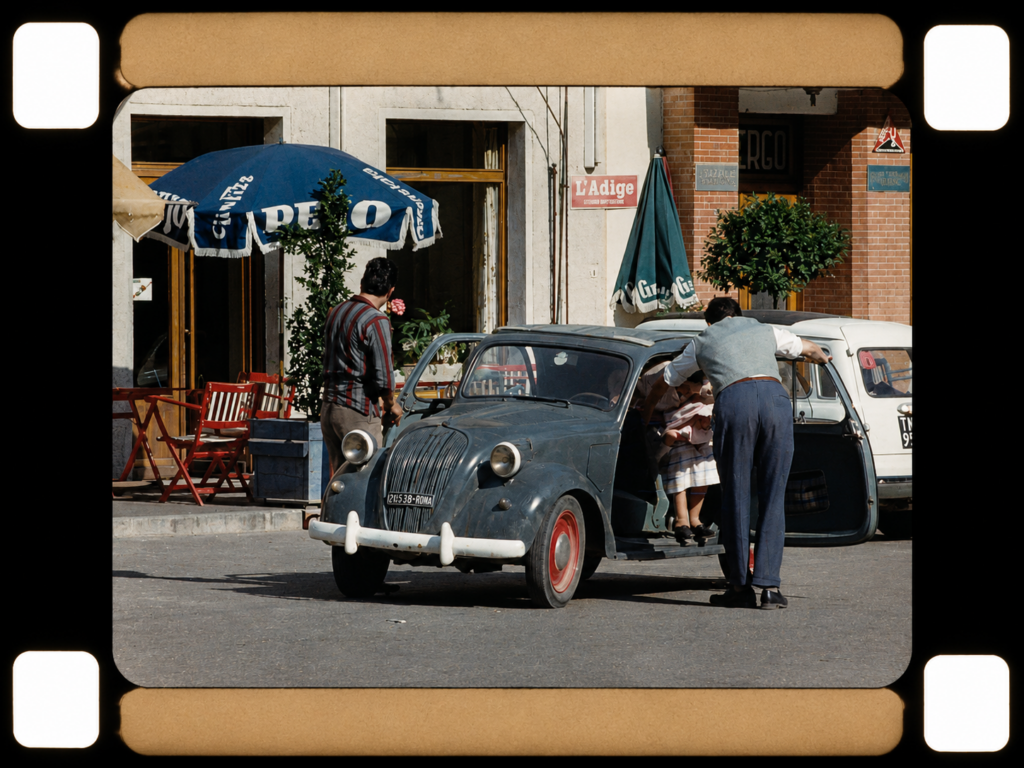
Tommasino Andreatta Alpine Estate
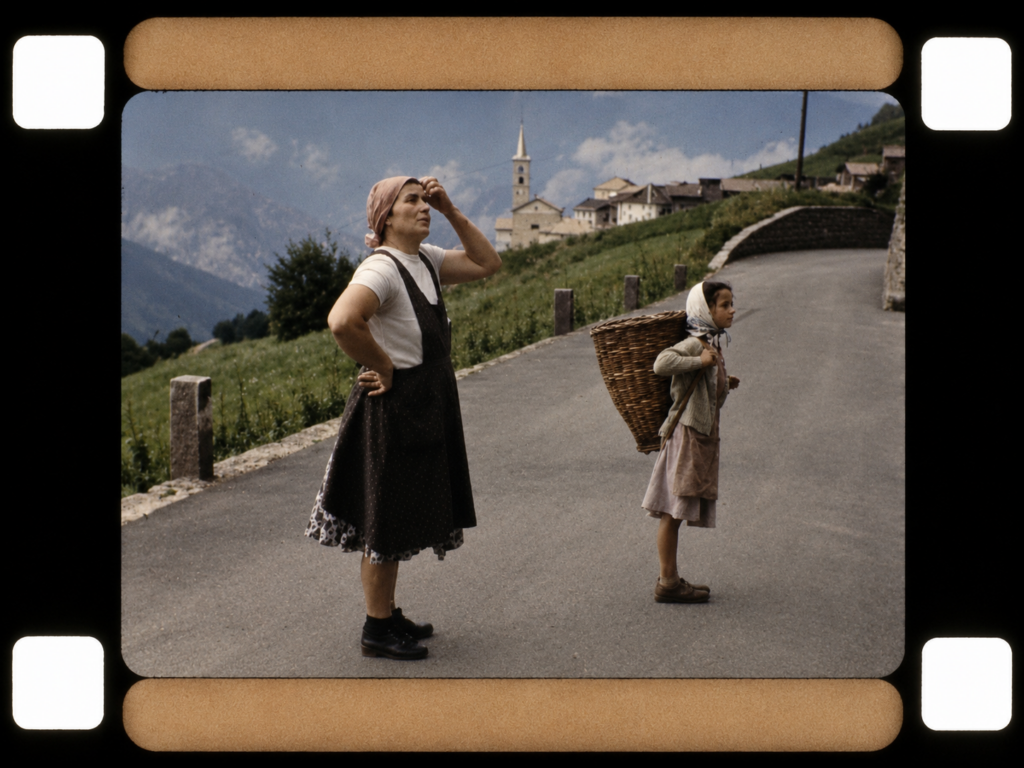
Summer in Valfloriana by Paolo Arnoldi
Lorenzo Pevarello
Lorenzo Pevarello is an author, director, and researcher at the Trentino Historical Museum Foundation, where he is responsible for the Film Archive. Active for over thirty years in the field of audiovisual documentation and documentary production, he has developed his professional path through directing, historical research, and the enhancement of visual memory. After initial experiences as a cinematographer and director of photography, he worked as an author and director in the fields of historical, artistic, and anthropological documentary filmmaking, creating over one hundred works selected at national and international festivals. Alongside, he has gained extensive experience in collecting oral testimonies, conducting over a thousand audiovisual interviews dedicated to the social history of the twentieth century, mountain life, labor, agriculture, and territorial transformations in Trentino. Within the Trentino Historical Museum Foundation, he is among the promoters of campaigns for the recovery and digitization of slow-motion footage, which led to the creation of the Family Films Archive. His current work focuses on the relationship between audiovisual archives, oral history, and public history, with particular attention to the processes of public restitution of community memories.
Archivio Arte Contemporanea
329 4828149
https://www.stefanogiovanazzi.eu
info@stefanogiovanazzi.eu
30 June ore 15:30 – 16:00 CEST
The library of the Bruno Kessler Foundation holds an ancient collection, personal archives, personal and institutional libraries, audio recordings of conferences held by the research centers ISIG – Italian-German Historical Institute and ISR – Center for Religious Sciences, cartographic materials, and microfilms. Donated collections are processed, organized, and cataloged in accordance with their integrity and archival constraints; only the old volumes are physically removed from the library collection, but not managed separately, to ensure their preservation under appropriate environmental conditions. In cases where a subject has both a bibliographic and an archival collection, efforts are made to facilitate communication between the two collections.
[https://biblio.fbk.eu/archivi/]
Matteo Fadini
Matteo Fadini, Head of the Library and Publishing at FBK. He earned his Ph.D. in Literary, Linguistic, and Philological Studies from the University of Trento and a diploma in Archival Science, Paleography, and Diplomatics from the State Archives of Bolzano. He has been a researcher at the University of Trento, a contract professor at Ca’ Foscari University of Venice, and a collaborator at the Universal Short Title Catalogue of St Andrews (Scotland). His research interests include 16th-century Italian literature, the history of books and libraries, and the digitization of archival and library assets. He has managed several digitization projects of scientific journals, including “HeyJoe-History, Religion and Philosophy Journals Online Access” (https://heyjoe.fbk.eu/), whose content recently reached 1 million downloads, as well as projects related to historical audio resources and scientific and cultural monographs (https://archive.org/details/biblio-fbk?sort=-downloads).
Archivio Arte Contemporanea
329 4828149
https://www.stefanogiovanazzi.eu
info@stefanogiovanazzi.eu
2 July ore 17:00 – 17:30 CEST
The exhibition project on Luigi Bonazza at the MART in 2026, developed by Ruffo Wolf, is a concrete opportunity to reflect on the role of “references” in a specific project. In this case, the strong presence of Secessionist culture in the artist’s formation gives rise to a series of cultural references that become “materials” underlying the project, without ever giving in to naive formalism or issues of “style.”
Ruffo Wolf
He studied architecture at IUAV in Venice, where he also engaged in teaching activities. From 2002 to 2015, he was an assistant and then a lecturer in architectural and urban design at the Politecnico di Milano. He has lectured and given conferences at several universities, including Politecnico di Milano, University of Venice, T.U. of Innsbruck, and Tongji University in Shanghai. He is a RIBA Chartered Member (Royal Institute of British Architects, UK); a member of ARB (Architects Registration Board, UK); and registered with the Ordine degli Architetti of Trento. He is the owner of the architecture firm RWA_RUFFO WOLF ARCHITETTI, with offices in Rovereto, Milan, and Vienna. He has designed projects in Austria, Brazil, China, Germany, India, Italy, Qatar, Poland, Romania, Rwanda, Russia, Vanuatu, and Zambia. From 2012 to 2015, he designed over 60 shops for the GIORGIO ARMANI brands in many cities worldwide. Recently, he designed the new PASTIFICIO FELICETTI headquarters in Val di Fiemme, the new VALMORA Mineral Water headquarters in Turin, and the new FLIS Biscotti headquarters in Warsaw. In 2023, he was selected by Architettura21 and the FFG (Austrian Research Promotion Agency) for an “Impact Innovation” project to requalify a building with 100 apartments in Vienna. He has published “Sequenze – Architetture” (Alinea, Florence 2002) and “RWA_WIP – Citogenesi e altri progetti” (List/Actar, Rome/Barcelona, 2007). He is a founding member of SINERGIE – an Interprofessional Group based in Trentino. He holds a diploma in music. Currently, he is the director of the RWA_architettura della produzione division at Lombardini22 in Milan.
Archivio Arte Contemporanea
329 4828149
https://www.stefanogiovanazzi.eu
info@stefanogiovanazzi.eu


