Francesco Frizzera: The Collections of the Italian Military History Museum

23 June ore 17:00 17:30 CEST

The MITAG – Italian Historical Museum of War in Rovereto hosts one of the world’s most extensive collections dedicated to the First World War. The exhibition pathway features weapons, uniforms, trench objects, archival documents, and testimonies that depict soldiers’ lives and the impact of the conflict on civilian populations. The museum’s collection is organized into several sections: The Great War: the main part of the collection includes uniforms, headgear, melee and firearms. Among the most iconic pieces is the historic Nieuport-Macchi Ni.10 aircraft.
Ancient and Modern Weapons: in the towers of Rovereto Castle, there are large collections of weapons covering a wide chronological span from the modern era to the 19th century. Photographic and Documentary Archive: houses hundreds of thousands of photographs, letters, diaries, posters, and archival films. Some of these materials are accessible digitally on the Archiui platform. Everyday Requisites and Objects: detailed exhibits show the harsh realities of trench warfare and the medical materials of the time.

Francesco Frizzera

Holds a PhD from the University of Trento. Since November 2016, he has been a post-doctoral researcher at the Catholic University of Eichstätt-Ingolstadt with a research project on food and agricultural policies in Germany from the Great War to 1933. Since 2019, he has been the Director of the Italian Historical Museum of War in Rovereto. His research areas include: population movements in Europe (1914–1923), food and agriculture (1914–1933), technological transformations in the Alpine region (19th–20th centuries), nationalism and education in the Alpine area (1848–1945).

Fondazione Artieri 1852

349 5661183

View Organizer Website

Archivio Arte Contemporanea
329 4828149
https://www.stefanogiovanazzi.eu
info@stefanogiovanazzi.eu
TSpace

via Scuole, 24
Rovereto, Trento 38068 Italy
+ Google Map
329 4828149
View Venue Website

Vittorio Carrara: Die Bibliothek eines Kunstsammlers. Die VAF Stiftung in der BUC von Trient

1 July ore 16:00 16:30 CEST

Over 16,000 volumes, collected over 50 years of passionate research on contemporary art and thought by the German collector Volker W. Feierabend, are now hosted at the Central University Library of Trento. An important cultural treasure, the documents closely linked to Feierabend’s works, stored at the Mart, Museum of Modern and Contemporary Art of Trento and Rovereto, provide a truly valuable opportunity to deepen the understanding of 20th-century artists and masterpieces.

Vittorio Carrara

Vittorio Carrara (1963), born in Verona and now living in Trentino, is director of the Central University Library of Trento. He studied medieval history at the University of Bologna and the Catholic University of Milan. He has studied the history of medieval monasticism, the religious and civil history of Trentino between the 19th and 20th centuries, and bibliography.

Fondazione Artieri 1852

349 5661183

View Organizer Website

Archivio Arte Contemporanea
329 4828149
https://www.stefanogiovanazzi.eu
info@stefanogiovanazzi.eu
TSpace

via Scuole, 24
Rovereto, Trento 38068 Italy
+ Google Map
329 4828149
View Venue Website

Guided tour of Palazzo Savioli-Antonini-Monte, now Fondazione Artieri 1852

23 June ore 18:30 19:30 CEST

Andrea Benoni will guide us in discovering Palazzo Savioli-Antonini-Monte, today owned by the Artieri Foundation 1852. Visitors will have the opportunity to explore the courtyard and some rooms of the palace, walk through corridors and balconies, and see what the Savioli, Antonini, and Monte families saw during the times they lived in the palace. Together, we will trace the historical events of the building by reading this brief essay by Giuseppe Costisella, a renowned Trentino historian and essayist, author of numerous well-regarded monographs dedicated to local history, architecture, and traditions of the Trentino region. His research has particularly focused on historic buildings, noble families, institutions, and the ancient dialects of Trentino-Alto Adige.

« The Savioli and Monte houses in Rovereto

In the narrow streets of the city center, so full of charm, many houses attract the attention of passersby due to their architectural beauty and the grace of the worked stones that adorn them. Particularly noteworthy for the testimony they provide of distant events and for the memories they hold of ancient families are the two contiguous houses now marked with numbers 1 and 5 on Via della Terra, located to the right of those proceeding from Piazza S. Marco towards the Tower.

Although they completely differ in their external appearance today, they originally had a common origin and, for several years, also shared the same function. This was until Gasparo Savioli bought the complex of existing buildings from the merchant Oliviero Olivieri, as described in the deed of May 24, 1564, by notary Marco Porta: “a house covered with tiles with an apothecary’s shop, a storeroom, chambers, underground vaults, a courtyard, in the district of La Campanella, bordering the common road in front, behind the walls of the land of Roverè, on the side towards Trento Pietro Saibante and Via Consortale, and on the other side the heirs of Gaspare Trentini.”

The agreed price for Ragnese was 1,350. Gaspare paid part of it in cash and part in silk fabrics called “damaschi rasi e ormesini.” This reveals the type of activity carried out by the buyer. In fact, the Savioli family, originally from Bardolino and established in Rovereto since the second half of the 1400s, is rightly credited with introducing the art of weaving to Rovereto, which in turn gave an impulse to other activities, particularly dyeing. Thanks to favorable conditions—such as the abundant availability of water for industries and its geographical position for trade—Rovereto became a leading center that attracted wealthy entrepreneurs from all over, along with a large number of skilled workers and artisans. These collectively gave Rovereto society its distinctive character—open to progress, civil development, and culture—that found its best expression in the 18th century.

In 1562, Gasparo, together with his brothers Donato and Giovanni, was made noble of the Holy Roman Empire for his merits in the industrial field, and Emperor Ferdinand I also granted him a noble coat of arms. Shortly after, he remodeled the house he had just purchased to suit his business, placing the family crest in a key position above the main door of the larger building (via della terra n. 5). This house, enhanced by the presence of a charming balcony, has remained almost unchanged to this day. The house at number 1 was instead one story high, while on the ground floor, each had looms working tirelessly to produce precious fabrics destined for German merchants.

Unchanged through the centuries is also the portico located between the two houses, now called the “Scala della Torre,” from which one descends into Piazza delle Erbe. In the past, however, when the “terra di Roverè” was still enclosed by Venetian walls that extended in a straight line from the porticos to the bastion of the Trivio alley, the portico was a communal passage that allowed access to the houses built against the walls and to the rear part of those facing the Church of S. Marco; it was called “pontirola sotto la chiesa di S. Marco” or also “introlo” or “androna,” often accompanied by the names of various owners of the houses—Saibanti, Savioli, Sbardellati, etc. The Venetian walls, which passed where the staircase leading down to the square now begins, formed an impassable barrier. Beyond it, exactly where the now-constructed Piazza delle Erbe and Piazza Malfatti are, there was a “cesura” (a break or gap) belonging to the Convent of the Carmelites of S. Maria.

The industrial activity, so well managed by Gaspare, was not continued by his two sons: Federico, who dedicated himself to commerce and moved to Nuremberg, and Gian Nicolò, who graduated in law and practiced as a lawyer in Rovereto. The only surviving son, named Gasparo like his grandfather, worsened the family estate with debts and, dying still young in 1647, left his wife Aquilina Eccaro the heavy task of arranging and adequately dowries for their five daughters born from their marriage. The widow succeeded in this task, naturally resorting to additional debts. Of those daughters, two, Francesca and Diodata, married in Rovereto: the first to the doctor Antonio Folgarait, the second to the noble Francesco Fontana, captain of Castel Penede; Camilla in Riva with the doctor Alessandro Salvadori, and Angelina and Elena with two notaries from Mantua, Antonio Tomasi and Francesco Valestra. Aquilina had to struggle a lot not only to gather the money but also, for the daughters married in Mantua, to transfer it to that city. At that time, money, valued for its silver and gold content, was a scarce commodity. Transporting it from one place to another also involved some risks, as well as expenses. Rovereto had to import wheat from Verona and Mantua and could not offer silk or wine to the producing countries. To meet the payment deadlines for the dowries of her daughters married in Mantua, Aquilina had to resort to an unusual expedient: entrusting a tenant of Volano with two pairs of oxen to be driven and sold in that city.

Aquilina’s successive acts of sale were now aimed at settling the many debts by selling the properties as opportunities arose. On March 9, 1678, in an act by notary Bernardino Benvenuti de’ Chiusole, the house now marked as number 1 was sold to Don Giovanni Monte, and it was described as follows: “a house located in the Piazza di San Marco, also known as the Torre, which borders on one side Nicolò Andreotti, in front the Imperial Road, behind partly to Andreotti and partly to the courtyard, on the other side the selling sisters with the large house, below the canal belonging to the sold house with the deep canal which remains to the Savioli sisters.”

From that moment, with the separation of the two houses, that branch of the Savioli family, which was about to become extinct, also lost all interest. Their old house was later transferred to Dr. Folgarait, Aquilina’s son-in-law, and around the mid-1700s, to the merchant Giuseppe Battisti of Mori; gradually, until the year 1884, when it was transferred to the Property of the Society of Mutual Assistance of Artisans of Rovereto as a bequest from the philanthropist Enrico Antonini, as recalled by the plaque mounted on the façade, right above the old family coat of arms.

The buyer of house number 1, with the deed dated April 1, 1679, by notary Pietro Malinverno, subsequently sold it to his brother Valentino. The price of 900 Ràgnesi was paid with money coming from the dowry of his wife Elisabetta dal Rì, from Mori. This is the moment when the house underwent a radical transformation that clearly distinguished it from the old Savioli house, of which it had been a lesser part until then.

She adorns herself with the beautiful portal with the coat of arms adopted by ‘Valentino Monte and with the inscription:

SOMMI DEI PRINCIPISQUE TUTUS GRATIA

The legend, perhaps intentionally cryptic, might lead one to believe that the Monte house had enjoyed the right of asylum, but it is known that in Rovereto such a privilege was granted only to the palace built in the 16th century by Baldessar Trautson in Borgo S. Caterina (now via Garibaldi no. 82). It is certain, however, that no one fleeing justice ever sought refuge there. Therefore, the inscription should be understood as an expression of gratitude to Providence for the possessions acquired, on the part of a man who respected the laws and civil ordinances. The new owner compensates for the limited space by adding additional floors and arranging the interior in a practical manner, where the layout of the rooms and the decorative details of stuccoes and wrought iron grilles contribute to creating an environment that displays a pronounced love for beauty, surpassing the needs that a wealthy family could then desire.

Who was Valentino Monte and what position did he hold in the Rovereto environment of his time? His father Antonio, known as Zuane Monte, moved to Rovereto from Cornè di Brentonico in the early 1600s, and for many years he successfully practiced commerce, running a shop in Rialto Square. Of his three children, the eldest named Giovanni became a priest, serving as an assistant to the archpriest of Rovereto, and from 1676 onwards, he also obtained the benefice of the church of S. Carlo, attached to the Convent of the Clarisses founded by Beata Giovanna. He accumulated a significant estate of tithes and fixed assets, which after his death in 1713, intestate, led to a long dispute among his heirs. The second daughter, Lucia, married the legal expert Pace Francesco Ceniga, who received a dowry of 1,500 florins (about 10-15 million lire today) from her brothers, according to the deed dated June 16, 1675, by notary Bernardino Benvenuti. Finally, Valentino, who like his father initially practiced successful commerce and increased his wealth, sought to rise in social prestige through honorary appointments. He served for some time as the administrator of the Rovereto Gymnasium founded in 1675, and later directed the postal service of Rovereto and Torbole. He also obtained the rank of officer in the town militias. In 1704, during the War of Spanish Succession, holding the rank of lieutenant, he intervened and succeeded in freeing Antonio Dossi of Cornè, who was detained at Rovereto Castle and had been arrested for suspected dealings with the enemy during the French invasion the previous year. Monte, in order to achieve this goal more easily, found it appropriate to “make a donation to a notable person of twenty yards of velvet and money,” and his fellow townsman Dossi, upon being freed, committed to repay him. (Act of February 10, 1704, notary Gio Francesco Turrini).

While Valentino’s ambitions achieved significant satisfaction in every field, his greatest desire to see his descendants continue was disappointed. From his marriage, he had only two daughters: Lucia (1678 – 1750), who married Giacomo Cristoforo Hinitz (1665 – 1751) in 1705 and had descendants, and Teresa, who married Dr. Antonio Chiusole in 1719 but had no children.

Now, the origin of the coat of arms adorning the portal of that Monte house remains to be understood. It did not, in fact, come to Valentino along with a noble diploma, although he was designated as noble in various notarial acts. Its characteristics show that it was granted by a Palatine Count: a dignitary who, by imperial delegation, had the authority not only to appoint notaries and legitimize illegitimate children but also to enable deserving individuals, based on their condition, to use a coat of arms for their dignity. During that time, a multitude of such honors was bestowed upon many Rovereto families by Bartolomeo Pizzini (1644–1714), authorized by a diploma from Leopold I, dated August 17, 1770. Perini lists as many as 26 grants of coats of arms attributed by Pizzini through notarial acts, between 1690 and 1714, to as many families. However, the Monte family does not appear in this group. But one cannot believe that Palatine Count Pizzini was inactive in granting coats of arms between 1670 and 1690 without paying attention to the ambitions of Rovereto merchants.

It is rather legitimate to suppose that in those years he directly issued the diploma without any trace of it remaining in a notarial deed, as will be the case from 1690 onwards. But even if it is not known who conferred it upon him, the use of the coat of arms by the Monte must have been entirely legal. It also appears in his secret will of December 14, 1718, which he claims to have written by his own hand, “corroborated by my seal, in which is impressed a shield with a lamb and above it two stars, and above the shield two uppercase letters V and M”; a will that he entrusted to notary G. B. Mascotti to be published after his death. He resorted to this measure because he had left his daughter Teresa only the legitimate share, reserving the other three-quarters for his daughter Lucia, married to Hinitz. Evidently, he must have been opposed to the marriage Teresa was about to enter into with Dr. Antonio Chiusole, for which a dispensation from Rome for third-degree kinship was invoked. However, the marriage took place two months later and was celebrated in the church of Madonna del Monte, with Dr. Gio Felice Ceniga and Cristoforo Hinitz as witnesses—one being a cousin, the other a brother-in-law of the bride. After returning to his previous decision, on March 17, 1727, Valentino dictated a new will to the same notary Mascotti, in which he designated his two daughters as equal heirs.

In subsequent divisions, the house passed into the ownership of the Hinitz family. Members of this family, originally from Silesia, had held positions in the magistracy in Innsbruck, where Giacomo Cristoforo was born. In 1686, he came to Rovereto as the procurator of the Folkamer and Seitel house from Nuremberg, and he immediately obtained citizenship there. Like his father-in-law Valentino Monte, he was part of the urban militia, in which he reached the rank of lieutenant of the white armor company. From the Rovereto branch of this family, several notable individuals emerged, including the lawyer Cristoforo (1737–1790), who, together with his sister Lucia, obtained a noble diploma from the Holy Roman Empire in 1765, with the predicate of Gutentall and the coat of arms featuring a rampant lion. It is thanks to these two Hinitz siblings that the magnificent portal of the house has preserved its original appearance, with the coat of arms of their great-grandfather Valentino Monte.

Fondazione Artieri 1852

Since 1852, the Artieri Foundation has preserved and renewed a long tradition of solidarity, participation, and civic engagement. Originally founded as a mutual aid society, it has endured through generations and social changes, maintaining a strong connection with the community, with the aim of promoting cultural, social, and collective interest initiatives. Its history tells of a heritage of values that still today guide the activities of the Foundation.

Fondazione Artieri 1852

349 5661183

View Organizer Website

Archivio Arte Contemporanea
329 4828149
https://www.stefanogiovanazzi.eu
info@stefanogiovanazzi.eu
TSpace

via Scuole, 24
Rovereto, Trento 38068 Italy
+ Google Map
329 4828149
View Venue Website

Anna Zinelli: Kunsthaus of Merano. Practices of activation, mediation, and critical reinterpretation of archives

1 July ore 15:30 16:00 CEST

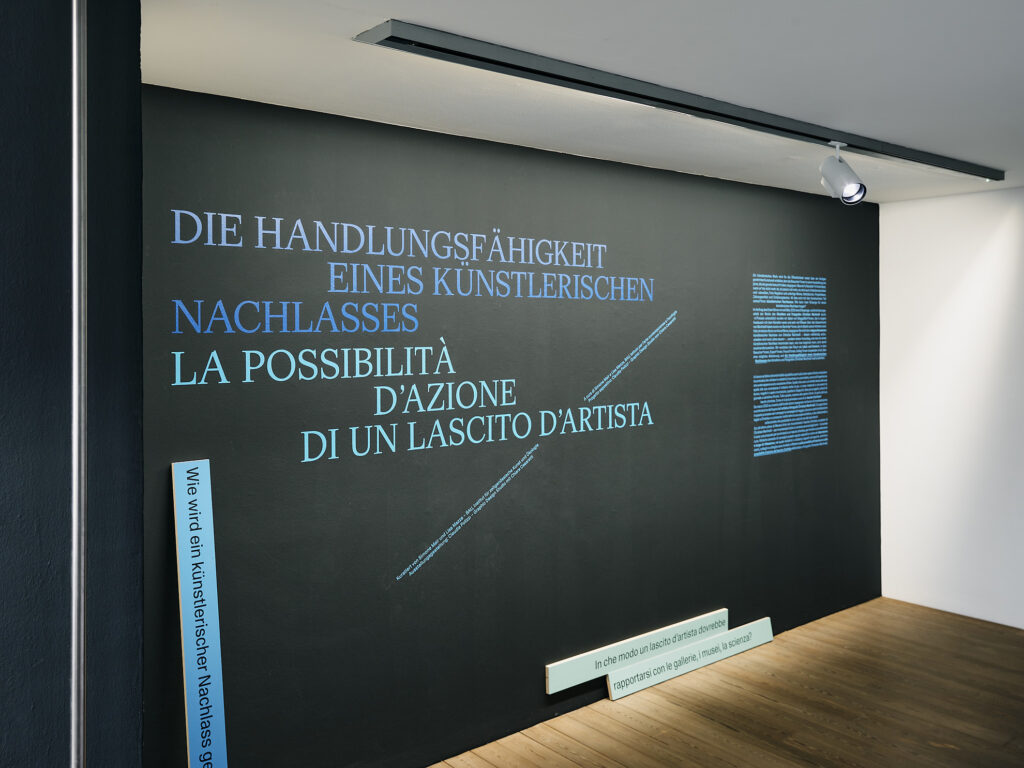
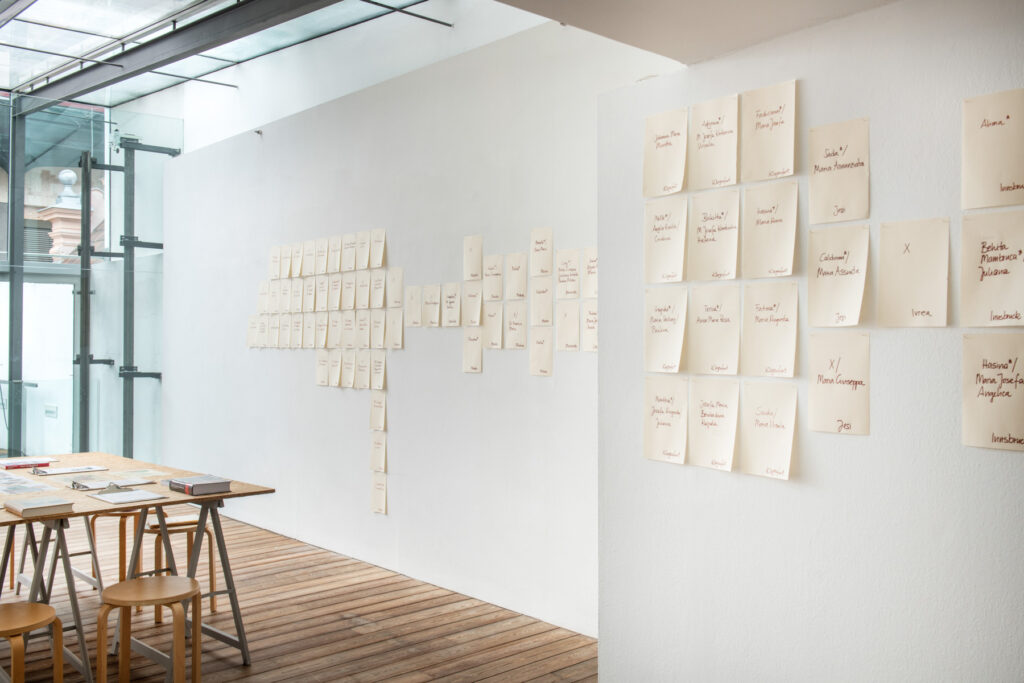
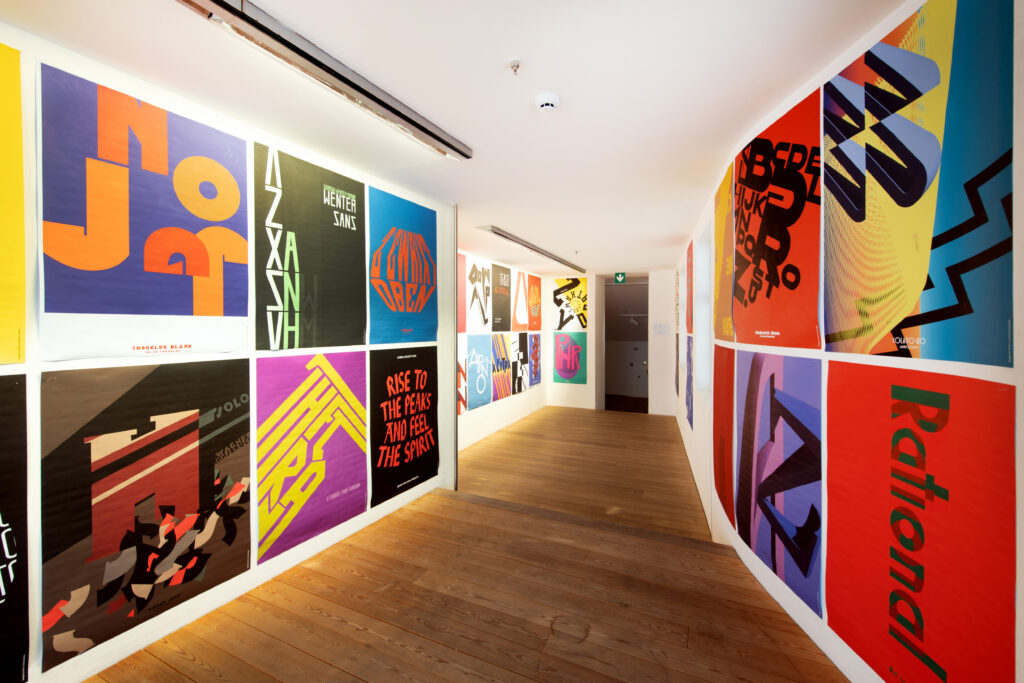
The intervention presents three case studies exhibited at the Kunsthaus, which engaged with archives through different approaches: from working on the legacy of the Meranese artist and photographer Christian Martinelli, to the educational project Alpitypes, which led to a contemporary reinterpretation of graphic archival sources, to the exhibition by Belinda Kazeem-Kamiński, which offered a decolonial reading of the memories preserved in archives. In these projects, archives were considered not only as places of preservation and protection but also as devices capable of generating new narratives.

The possibility of action of an artist’s legacy. Curated by BAU. Photo by Davide Perbellini
Aerolectics – Belinda Kazeem-Kamiński. Curated by Lucrezia Cippitelli and Simone Frangi. Photo by Ivo Corrà
Alpitypes. Curated by Antonino Benincasa, Massimo Martignoni, Anna Zinelli. Photo by Ivo Corrà

Anna Zinelli

Anna Zinelli is an art historian (Ph.D.). She has published numerous articles in scientific and popular magazines and essays in various catalogs. Among her publications are: Socin and Carmassi (Tamassia Zinelli, Skira 2016), 1955–1968: Italian Artists at Documenta in Kassel (Mimesis 2017); Meeting Christian Martinelli (begegnen) (Schnitzer Zinelli, Esperia 2024). Since 2012, she has been collaborating on the MoRE project A Museum of Refused and Unrealised Art Projects and, since 2017, she has been a scientific collaborator, assistant to the management, and responsible for communication in the Italian language at Kunst Meran Merano Arte.

Fondazione Artieri 1852

349 5661183

View Organizer Website

Archivio Arte Contemporanea
329 4828149
https://www.stefanogiovanazzi.eu
info@stefanogiovanazzi.eu
TSpace

via Scuole, 24
Rovereto, Trento 38068 Italy
+ Google Map
329 4828149
View Venue Website

Andrea Benoni / Stefano Giovanazzi: Archivi di Comunità. Acts of transforming personal memories into shared memories

23 June ore 16:00 16:30 CEST

Presentation by the curators of the first edition of “Community Archives”:
Thirty-two encounters with artists, collectors, curators, art historians, archivists;
Inviting twenty-six institutions;
An exhibition in Rovereto;
Twelve guided tours of archives, foundations, and museums;
A logo and a manifesto designed by the artist Maurizio Nannucci.

Rovereto • Trento • Bolzano • Merano • Verona • Altivole
June 23 – July 31, 2026

The guests of the scheduled working days for the first edition of Community Archives will present specific study cases dedicated to the theme:

Acts of transforming personal memories into shared memories

Presentation

Community archives perhaps represent the last ‘utopia,’ a precious, complex, and at the same time fragile heritage, bearing witness to the ‘becoming’ of cultures, identities, and differences, of generations of living beings. Unlike big data concealed within data centers—collections of personal and collective data so vast and complex that they cannot be processed and decoded with traditional methods but only through algorithms and artificial intelligence, primarily for private use and exploitation—the utopia of community archives offers a different history of ideas.

Libraries and archives are seemingly composed of collections of material objects, such as printed documents, ancient and modern books, printed or handwritten music, sound or video recordings, graphic documents, drawings, engravings, photographs, artworks, collages, sculptures, digital works, technical inventions, objects from Wunderkammer—those theatrical rooms of curiosities (like the two-headed calf housed in the Civic Museum of Rovereto until the 1970s)—or minor materials: invitations, leaflets, ephemeral items. However, they always revolve around thoughts and reflections—by authors, publishers, producers, and disseminators—primarily: ‘immaterial objects,’ utopias in the strict sense. All together, they testify to the ‘wealth’ but also the ‘poverty’ of an impermanent social fabric in space and time, contaminated by multiple influences of nature and by cultural, historical, artistic, scientific, and technological factors. The variety of documents and testimonies that have reached us—preserved as genealogies, manuscripts, photographs, letters, maps, artworks, and everyday objects—tactile, visual, olfactory, auditory, and gustatory—allows the intertwining of very different disciplines. From this diversity, ‘community archives’ derive density and immeasurable potential.

Validation

The approach to an ever-expanding array of documents highlights the urgency of redefining the concepts of competence and validity, and at the same time calls for an integrated approach to the theory of knowledge. Private, unique collections represent the condensation of countless, indefinable memories and personal and interpersonal passions—materialization of Borges’ ‘Library of Babel’ in memory—while public libraries and archives play a role in preservation, organization, and providing easier access to mostly indexed documents. Documentary and testimonial resources often allow us to reconstruct personal and collective stories in great detail and with remarkable precision, which would otherwise be difficult to comprehend. The complexity of the knowledge contained in these archives requires ongoing personal and collective efforts—such as verifying sources, validating and attributing information, reading and interpreting—as well as continuous work of transcription, sometimes translation. When applied with the necessary care and attention, validation, attribution, protection, organization, study, and enhancement are tasks that future generations will be able to continue, even in contexts we cannot yet foresee but can only imagine.

Complexity beyond rituality

Community archives define the points of contact between disciplines and knowledge, reflecting the plurality of identities, memories, and unique practices that shape various social bodies. They are not merely repositories of documents but dynamic spaces where history, sociology, anthropology, archival science, and cultural studies intertwine to reshape the world and interpret traces of life — from the earliest testimonies to the most recent, from the essential to the complex. Their complexity and heterogeneity become evident when interpretation for investigative work requires integrating methodologies and perspectives: from qualitative analysis to statistical management, from participatory engagement with multiple stakeholders in evaluating critical and interpretive positions, to improving conservation and restoration techniques often adapted to specific climatic and environmental needs. Moreover, those working with community archives must address how to represent the multiplicity of narratives [Data Visualization] and the safeguarding of both singular and collective memory, often fragmented or subject to manipulation, sometimes marginalized. Consider, for instance, the countless objects in collections and museums originating from formerly colonized countries, whose country of origin, creators, or communities that valued and exchanged them are unknown: these represent a kind of ‘history of technique and art without names or places,’ driven by political events, domination, theft, or sometimes by excessive zeal or the desire to preserve and safeguard objects from neglect, time, and natural decay. Multistrategy and multidisciplinary approaches are increasingly essential to attempt to restore a hypothetical zero point of the object of thought — the moment of its emergence on the horizon of events: rediscovering the object at its origin allows us to understand its power and definition (bestimmung), and to reawaken the specific ‘state of the art’ in which it was born and established. An inverse process to ritualization. One last remark: all tools of knowledge can be conceived as means of social and cultural empowerment. In a time of rapid change, community archives serve as spaces of resistance against homogenization, questioning the concept of identity, and require new forms of knowledge and approaches to coexist social history, science and technology, aesthetic practices, sensitivity, desire and passion, ethics, and solidarity.

Genealogy and iconology

Paraphrasing Michel Foucault, we can consider genealogy as the art of uncovering the origins and hidden histories behind interpersonal and institutional practices, revealing how the present results from complex, often unsuspected historical processes, sometimes subject to distortions. Genealogies play a fundamental role in community archives because they help trace and document isomorphic lines or historical fractures, natural and cultural dynamics. Through the collection and analysis of information evaluated using tools from semiotics, iconography, genetics, anthropology, and other complex disciplines, archives sometimes enable us to trace the unfolding of relational, familial, and community forms, as well as sedentary or migratory dynamics, along with changes in ideologies and thought trajectories. Critical analysis of genealogies allows us to reconfigure, confirm, or refute personal and collective memories, reinforcing the delicate approach needed when dealing with such a sensitive subject as the space-time dimension of vital dynamics: autonomy and belonging, distance and continuity across generations. Genealogies present themselves as an ‘field’ still waiting to be explored from various perspectives—historical, anthropological, sociological, demographic, urbanistic, architectural, geographic, and scientific. The sources for such genealogical research must include grand mythic narratives, religions, philosophies, linguistic theories, and theoretical positions—all ‘texts’ that have reached us in the form of hypotheses, stories, essays, catalogs, registers of births and deaths, marriage records, statistical data from censuses, notarial acts (property or sales), laws and regulations, as well as personal or collective archives, both public and private. Seen as a whole, these states of thought often appear opaque, arid, unproductive, sometimes insubstantial or even harmful or devastating—fertile ground for the ‘banality of evil’ as Hanna Arendt describes. However, when realigned, reread, and integrated, they can serve as sources for a generative grammar capable of opening new fields of investigation and new perspectives. Similarly, a reflection on iconology as an immaterial genealogy of images allows us to go beyond markedly ideological and teleological obstacles, approaching the mental and symbolic spaces where thoughts and behaviors take shape.

Reality and social behaviors

We can consider community archives and vast genealogical collections as true ‘zones of flow’ between the imaginary and the real (in the sense given by Jacques Lacan): fundamental stages that allow us to attempt to traverse the material and immaterial heritage of individuals and communities, whether more or less articulated, intersecting or overlapping. These zones of flow sometimes present themselves as inaccessible due to the presence of barriers and obstacles—real or metaphorical—while at other times they open up to new vantage points, revealing unexpected horizons, valleys, and expanses that come into our view and consequently generate further opportunities for reflection and interpretation. It is up to us, through our actions, to live these landscapes as battlegrounds, theaters of war, conflict zones—or rather, as places of utopian transit, coexistence, and material and immaterial growth. Even language, like any other process, can become a tool of offense or an expression of resentment, or it can be used to mediate, welcome, safeguard, or simply to bear witness to gratitude.

Knowledge and participation

Archives and libraries, because they regularly address issues related to the preservation and sharing of knowledge, also play an active role in transforming the social fabric: a key point is that access to culture, information, and thought in its many forms cannot be considered neutral. It requires, over time, a transformation of roles and skills, as well as an active and stimulating relational and spatial approach. Community engagement initiatives, events, and collaborative projects enable open dialogue between researchers and the community, citizens and institutions. They strengthen the sense of belonging, transparency, and participation in a democratic process—transforming personal memories into history.

To survey, share, and design

Everyone recognizes the potential of private archives—those of artists, researchers, historians, and writers: the challenge is to connect this promise of the future with a more open, widespread relational fabric, capable of creating opportunities for its “shaping.” A crucial task is to identify these collections of thoughts or material objects and invite each individual to participate in expanding the boundaries of their actions, sharing their knowledge to collaboratively design new scenarios.


Andrea Benoni

Andrea Benoni is president of the Artieri Foundation. Former mayor of Calliano (TN), he was president of the Vallagarina Artisans Association for many years, and is the creator and organizer of numerous craft fairs, exhibitions, and events dedicated to the history of violin making in Trentino.

Stefano Giovanazzi

A graduate of the Rovereto Teacher Training Institute (TN) and the Trento State Art Institute, he attended the Academy of Fine Arts in Venice in the early 1980s, where he graduated in Painting under the artist Emilio Vedova. Founder and curator of AAC Archivio Arte Contemporanea in Rovereto, he has been president of the Numero Civico cultural association since 1994. In over thirty years of activity, he has curated hundreds of events related to contemporary art and thought. He has collaborated numerous times with artists, musicians, and writers, with museums and cultural institutions, academies, and with governments and governmental institutions. He has worked with Mario Airò, Stefano Arienti, Vincenzo Cabiati, Andrea Crociani, Francesco Dal Bosco, Eva Marisaldi, Chiyoko Miura, Liliana Moro, Fabio Polvani, Luca Quartana, Andrea Rabbiosi, Federico Tanzi-Mira, Grazia Toderi, Marco Vaglieri, Vedova Mazzei, and Francesco Voltolina; He has curated exhibitions featuring works by Rita Ackermann, Richard Ambleton, John Currin, Bruce Elder, Joseph Kosuth, Sean Landers, Sherrie Levine, Raymond Pettibon, Richard Prince, Jim Shaw, Michael Snow, Bill Viola, and Jeffrey Wallace. He has curated events in collaboration with the Italian Senate, the Ministry of Cultural Heritage and Activities, the Canadian Embassy, ​​the Vasco-Basque Government (Spain), the Instituto Cervantes de Cultura (Spain), the British Council (Great Britain), the French Ministry of Culture, the Institut Français (France), and the Goethe Institute (Germany). A genealogist, he is responsible for an extensive genealogical archive, „Trees and Leaves,“ which contains over a million genealogical positions.

Fondazione Artieri 1852

349 5661183

View Organizer Website

Archivio Arte Contemporanea
329 4828149
https://www.stefanogiovanazzi.eu
info@stefanogiovanazzi.eu

TSpace

via Scuole, 24
Rovereto, Trento 38068 Italy
+ Google Map
329 4828149
View Venue Website

Elena Bini: Sven Sachsalber. Mapping an artistic practice: a Museion research project

2 July ore 18:00 18:30 CEST

Sven Sachsalber (Silandro, 1987 – Vienna, 2020) was a prominent artist who, with irony and determination, worked across various artistic media, and whose evolution Museion closely followed from the very beginning. Recognizing the regional and international importance of his work, the museum decided, in the year following his death, to systematically map his oeuvre, ensure its preservation, improve its accessibility, and reconstruct the network of relationships surrounding the artist. The project was carried out in two main phases: the first focused on his years of study in London and his artistic activities, as well as his network of relationships across Europe (2009–2013); the second concentrated on the years spent in New York (2014–2020). This multi-year research initiative (2021–2025), funded by the German Cultural Division of the Autonomous Province of Bolzano, was initiated and directed by Museion in collaboration with BAU – Institute for Contemporary Art and Ecology, in ongoing exchange with Sachsalber’s family. The research concluded with a public presentation (December 6, 2025 – June 21, 2026), accompanied by a publication designed by Studio Claudia Polizzi, and the online release of the collected data. The exhibition and publication serve as reflective pauses that continue the ongoing research on the artist, acting as moments of suspension and reorganization to further explore his work across the coming years and decades. They are active storytelling efforts aimed at keeping alive the memory and legacy of the artist. Mapping an artistic practice: Museion’s research project exemplifies how working with (and engaging with) an artist’s legacy contributes to the preservation of cultural heritage within a territory, fostering new interpretations and international connections.

Elena Bini

Elena Bini is Head of Collections and Archives at Museion – Museum of Modern and Contemporary Art in Bolzano and coordinates the Museion Passage projects. She graduated in Cultural Heritage Conservation from the University of Udine, developing a specific interest in the protection, promotion, and documentation of contemporary artistic heritage. Before joining Museion, she taught art history and cultural mediation, collaborating freelance with museums, institutions, and artistic projects in South Tyrol. She has worked at Museion since 2000, where she has held various roles in art mediation, collection management, and the development of archiving, cataloging, and promotion projects. Her work focuses on the conservation and management of the museum’s holdings, while also promoting research practices and archive accessibility as fundamental tools for the understanding and dissemination of contemporary art.

Fondazione Artieri 1852

349 5661183

View Organizer Website

Archivio Arte Contemporanea
329 4828149
https://www.stefanogiovanazzi.eu
info@stefanogiovanazzi.eu

TSpace

via Scuole, 24
Rovereto, Trento 38068 Italy
+ Google Map
329 4828149
View Venue Website

Manuela Iannetti: Remember or forget? Archives, memory, and storytelling in the Archivissima experience

24 June ore 17:30 18:00 CEST

Archivissima is Italy’s first festival dedicated to promoting the heritage preserved in the historical archives of entities, institutions, and companies. Conceived by Promemoria Group and organized by the cultural association Archivissima APS, the event was born in 2018 following the success of the format “La Notte degli Archivi.” Year after year, the festival renews its commitment to promoting the stories preserved in historical archives to the wider public and to enhancing Heritage through a blend of different languages and media. In 2026, the event reached its ninth edition, held from June 4th to 7th in Turin at the Turin headquarters of the Museum Hub of the Gallerie d’Italia of Intesa Sanpaolo, and on June 5th across Italy, maintaining the goal of renewing tools, media, and formats to serve archive content. The main objective of Archivissima is to promote the richness of patrimonies. To do so, it is necessary to change the perspective on the past stored in papers and documents, viewing it as a space of possibilities rather than something fixed and given forever. Archives speak to the present and help shape new paths for the future, from the valorization of assets to widespread cultural participation, shared knowledge, and the development of new models for the growth of the cultural industry. To maximize opportunities for participation and engagement by entities, large and small, present in various territories, Archivissima invests in creating forms of involvement that include both traditional and digital formats, supporting the development of original products and formats alongside in-person meetings and experiences.

Manuela Iannetti

Born in Turin in 1976, she works on cultural content and projects. Since 2018, she has been the director of Archivissima – The Festival and Night of Archives, the first Italian event dedicated to the promotion and valorization of the historical archives of organizations, institutions, and companies. She oversees cultural programming, partner relations, and overall coordination. She also collaborates with Promemoria Group, a leading company in heritage valorization, to create digital itineraries for archival content. In the publishing field, she managed the editorial department of the Alicubi agency for over ten years and continues to design cultural products for associations, non-profit organizations, and companies. Her publications include: The Continent Next Door. Travels, Encounters, and Stories from Another South East (2025) and Those Wonderful Stories. Stories of Women in the South East (2021), published by Kurumuny Edizioni; the narrative reportage Claroquesí was also published by Antonio Tombolini Editore. Postcards from the Revolution (2018) and the short story collection Boris and the Strange Case of the Yellow Pig (2016).

Fondazione Artieri 1852

349 5661183

View Organizer Website

Archivio Arte Contemporanea
329 4828149
https://www.stefanogiovanazzi.eu
info@stefanogiovanazzi.eu

TSpace

via Scuole, 24
Rovereto, Trento 38068 Italy
+ Google Map
329 4828149
View Venue Website

Claudia Castellucci: The aesthetic question of an artistic archive, in its conception and use

29 June ore 10:00 4 July ore 19:00 CEST

Claudia Castellucci participates in Archivi di Comunità with a text titled: Some notes on the historical archive of Socìetas Raffaello Sanzio. The document will be distributed at TSpace starting Monday, June 29, 2026, along with “Bollettino dell’Archivio No. 1, October 13, 2018” and “Bollettino dell’Archivio No. 2, November 24, 2018.” As Claudia writes, the texts delivered to “Archivi di comunità” highlight some issues regarding the functions of the physical archive of Socìetas Raffaello Sanzio (1981–2006), raised during a seminar held in 2018: in particular, the ability “to awaken the preserved objects, both visually and intellectually.” The artist will not be present in person.

Amleto. La veemente esteriorità della morte di un mollusco, by Romeo Castellucci/Socìetas Raffaello Sanzio (on stage: Paolo Tonti). Cesena, Teatro Comandini, 1992. © archiviostoricosocietas.eu (All rights reserved)

Claudia Castellucci / Societas

With training in the visual arts, Claudia Castellucci, in 1981, co-founded with her brother Romeo, Chiara Guidi, and others, the Societas Raffaello Sanzio, a theatrical company that became renowned worldwide for its primarily visual, plastic, and sonic approach to theater. When, in 2006, the company members began pursuing separate research paths, C. Castellucci continued her engagement with plastic art through the creation of works based on a philosophical practice centered on rhythm, which also led her to establish several schools with an ancient inspiration, focused on the pleasure of knowledge rather than formal training: the Theatre School of Descent (1989-93); Stoa (2003-07); and Mòra (2015-19). In 2011, she directed the École du rythme in Bordeaux, on the occasion of the Urban Art Biennale. Since 2014, she has been leading Movement Rhythmic Exercises worldwide, starting in Athens. Among her writings are: Uovo di bocca (Bollati Boringhieri 2000), Setta Scuola di tecnica drammatica (Quodlibet 2015), and Bollettini della Danza (Edizioni Sete 2019). In 2020, she received the Silver Lion from the Venice Dance Biennale.

Fondazione Artieri 1852

349 5661183

View Organizer Website

Archivio Arte Contemporanea
329 4828149
https://www.stefanogiovanazzi.eu
info@stefanogiovanazzi.eu

TSpace

via Scuole, 24
Rovereto, Trento 38068 Italy
+ Google Map
329 4828149
View Venue Website

Alessandro Armani: Memoriale Brion. Un capolavoro di Carlo Scarpa in un camposanto di paese

4 July ore 11:00 12:00 CEST

Not far from Treviso, Tomba Brion designed by Carlo Scarpa is an absolute masterpiece of modernism, Venetian art and oriental philosophies inspired by the theme of true love. Immersed in the Treviso countryside, this is a masterpiece of the 20th Century Architecture: A silent, peaceful and harmonious place where different cultures and religions are blending for a unique experience.
The Memoriale Brion, donated to FAI by Ennio and Donatella Brion, was commissioned in 1969 by their mother Onorina Brion Tomasin, in memory of the deceased husband, Giuseppe Brion, born in San Vito di Altivole, founder and owner of the Brionvega Firm, a leading company in the production of electronics design devices during the Second post-war period.
This is Carlo Scarpa’s last work, one of his most complex, original, significant and expensive creation. It was realized between 1970 and 1978, the year of the architect’s death in Japan.

The monumental funerary building is surrounded by the Treviso countryside, set against the Asolo’s Hills, on the edge of the city of San Vito D’Altivole and close to its small graveyard. The access is through a monumental entrance, called propylei, characterized by a scenic entrance in the shape of two intertwined circles, as a symbol of the conjugal love on which the whole project is based on. The whole area is a L-Shaped 2200 square meters, raised above the country floor and surrounded by an inclined wall, in order to allow the view of the surrounding landscape. Made of green meadows and furrowed by canals with water lilies, it is designed with geometric shapes reminiscent of Islamic paradises and Japanese gardens. There you can find four buildings. The building’s heart is the so-called arcosolio, a low arch-bridge made of a shimmering mantle of glass tiles with gold leaf behind, which protects the sarcophagi of the two spouses Giuseppe and Onorina Brion, symbolically inclined as if eternally are facing each other. On one side of the space stands, there is an isolated meditation pavilion on the water, specially placed in front of the arcosolio; on the other side, there are the so-called ‘’tomb of parents’’ and the ‘’chapel or temple’’ used for funeral ceremonies, which can also be accessed from the outside of the cemetery, surrounded by water and a garden of cypresses. Consequently, in a subdued and discreet space, on the border between the private memorial and the public cemetery, there is the Carlo Scarpa’s tomb, who wanted to be buried here and today hosts his wife Nini Lazzari and it was designed by their son Tobia (with Fabio Lombardo), also an architect.

The Memoriale Brion is a family cemetery, made by the beautiful mind of Carlo Scarpa, who here expresses himself with freedom of means and languages in an extraordinary virtuosity, synthesis and climax of his culture and experience connected to his sensibility and vision. Carlo Scarpa has given the shape and atmosphere of a large garden open to everyone, creating a place of silence, peace and harmony, pervaded by a deep sense of the sacred, where different cultures and religions blend together through architectures dense with sophisticated symbols and hidden references, in order to invite all visitors to a universal meditation on life and death with a memorable, unique and engaging experience.

Alessandro Armani

Born in Rovereto, a graduate in cultural heritage sciences, he has worked for the FAI – Italian Environment Fund since 2018, initially as director of Avio Castle, Avio, Trentino-Alto Adige. Since 2025, he has been responsible for the Foundation’s North-Eastern Heritage. He is also responsible for the FAI Operational Management – Brion Memorial, Altivole, Veneto, a mature work by Carlo Scarpa, and for Villa dei Vescovi, Torreglia, Veneto.

Fondazione Artieri 1852

349 5661183

View Organizer Website

Archivio Arte Contemporanea
329 4828149
https://www.stefanogiovanazzi.eu
info@stefanogiovanazzi.eu

TSpace

via Scuole, 24
Rovereto, Trento 38068 Italy
+ Google Map
329 4828149
View Venue Website