Thomas Dalla Costa: The Collections of the Miniscalchi-Erizzo Foundation Museum

4 July ore 10:00 11:00 CEST

The Miniscalchi-Erizzo Museum, home of the eponymous Foundation established in 1964, is located in a complex of buildings with a late medieval layout in the heart of Verona, between Piazza delle Erbe and the Cathedral. Its diverse collection includes fossils, Etruscan and Roman artifacts, paintings, ancient drawings, sculptures, bronzes and plaques, as well as majolica, porcelain, antique furniture, weapons and armor, along with an impressive library and family archives. The collection has a layered history, being the result and consequence of the merging of collections from different families, and a fundamental component is what remains of the famous Wunderkammer created by the scholar Ludovico Moscardo from around 1630 to 1681. The presentation will primarily focus on the events related to this latter part of the collection, its partial dispersion, and the memories it still preserves and allows us to reconstruct.

Thomas Dalla Costa

Art historian and curator, Thomas Dalla Costa studied at the University of Verona, where he earned his PhD in 2012. In 2014, he served as Assistant Curator at the Castelvecchio Museum in Verona, and between 2019 and 2020, he worked as a Curatorial Fellow at the National Gallery in London. From 2022 to 2025, he has been working as an Associate Curator at the Miniscalchi-Erizzo Museum in Verona. He has curated and contributed to various exhibitions in Italy and abroad: Verona, Venice, London, Moscow, Madrid, Vienna. Thomas has received several research grants from international research organizations, including the Ermitage Italia Foundation, Save Venice Inc., and the Getty Museum (as part of The Getty Paper Project). He has published numerous articles in journals, books, and exhibition catalogs on topics such as the history of Venetian art criticism and painting from the 15th to 17th centuries; the organization of Venetian artistic workshops; and the use and function of drawing in the creative processes of Venetian artists of the 15th and 16th centuries. Thomas is also involved in curating or co-curating volumes focusing on these themes, such as the recent Venetian Disegno. New Frontiers 1420-1620, edited with Maria Aresin (Paul Holberton Publishing, 2024), and the Catalogo ragionato dei disegni – Fondazione Museo Miniscalchi-Erizzo (Silvana Editoriale, 2025). Additionally, he authored the monograph Venere e Adone by Titian: Art, Culture, and Society between Venice and Europe (Marsilio, 2019). Currently, he is the scientific coordinator of research and exhibition activities related to the celebrations for the 450th anniversary of Titian’s death, a two-year project investigating the use and function of landscape in Cadorino art.

Fondazione Artieri 1852

349 5661183

View Organizer Website

Archivio Arte Contemporanea
329 4828149
https://www.stefanogiovanazzi.eu
info@stefanogiovanazzi.eu
Palazzo Pizzini

Piazza Malfatti, 27
Rovereto, TN 38068 Italy
+ Google Map

Ruffo Wolf: The Architecture Project in the Exhibition Experience. The Role of References

2 July ore 17:00 17:30 CEST

The exhibition project on Luigi Bonazza at the MART in 2026, developed by Ruffo Wolf, is a concrete opportunity to reflect on the role of “references” in a specific project. In this case, the strong presence of Secessionist culture in the artist’s formation gives rise to a series of cultural references that become “materials” underlying the project, without ever giving in to naive formalism or issues of “style.”

Ruffo Wolf

He studied architecture at IUAV in Venice, where he also engaged in teaching activities. From 2002 to 2015, he was an assistant and then a lecturer in architectural and urban design at the Politecnico di Milano. He has lectured and given conferences at several universities, including Politecnico di Milano, University of Venice, T.U. of Innsbruck, and Tongji University in Shanghai. He is a RIBA Chartered Member (Royal Institute of British Architects, UK); a member of ARB (Architects Registration Board, UK); and registered with the Ordine degli Architetti of Trento. He is the owner of the architecture firm RWA_RUFFO WOLF ARCHITETTI, with offices in Rovereto, Milan, and Vienna. He has designed projects in Austria, Brazil, China, Germany, India, Italy, Qatar, Poland, Romania, Rwanda, Russia, Vanuatu, and Zambia. From 2012 to 2015, he designed over 60 shops for the GIORGIO ARMANI brands in many cities worldwide. Recently, he designed the new PASTIFICIO FELICETTI headquarters in Val di Fiemme, the new VALMORA Mineral Water headquarters in Turin, and the new FLIS Biscotti headquarters in Warsaw. In 2023, he was selected by Architettura21 and the FFG (Austrian Research Promotion Agency) for an “Impact Innovation” project to requalify a building with 100 apartments in Vienna. He has published “Sequenze – Architetture” (Alinea, Florence 2002) and “RWA_WIP – Citogenesi e altri progetti” (List/Actar, Rome/Barcelona, 2007). He is a founding member of SINERGIE – an Interprofessional Group based in Trentino. He holds a diploma in music. Currently, he is the director of the RWA_architettura della produzione division at Lombardini22 in Milan.

Fondazione Artieri 1852

349 5661183

View Organizer Website

Archivio Arte Contemporanea
329 4828149
https://www.stefanogiovanazzi.eu
info@stefanogiovanazzi.eu
Palazzo Pizzini

Piazza Malfatti, 27
Rovereto, TN 38068 Italy
+ Google Map

Francesco Frizzera: The Collections of the Italian Military History Museum

23 June ore 17:00 17:30 CEST

The MITAG – Italian Historical Museum of War in Rovereto hosts one of the world’s most extensive collections dedicated to the First World War. The exhibition pathway features weapons, uniforms, trench objects, archival documents, and testimonies that depict soldiers’ lives and the impact of the conflict on civilian populations. The museum’s collection is organized into several sections: The Great War: the main part of the collection includes uniforms, headgear, melee and firearms. Among the most iconic pieces is the historic Nieuport-Macchi Ni.10 aircraft.
Ancient and Modern Weapons: in the towers of Rovereto Castle, there are large collections of weapons covering a wide chronological span from the modern era to the 19th century. Photographic and Documentary Archive: houses hundreds of thousands of photographs, letters, diaries, posters, and archival films. Some of these materials are accessible digitally on the Archiui platform. Everyday Requisites and Objects: detailed exhibits show the harsh realities of trench warfare and the medical materials of the time.

Francesco Frizzera

Holds a PhD from the University of Trento. Since November 2016, he has been a post-doctoral researcher at the Catholic University of Eichstätt-Ingolstadt with a research project on food and agricultural policies in Germany from the Great War to 1933. Since 2019, he has been the Director of the Italian Historical Museum of War in Rovereto. His research areas include: population movements in Europe (1914–1923), food and agriculture (1914–1933), technological transformations in the Alpine region (19th–20th centuries), nationalism and education in the Alpine area (1848–1945).

Fondazione Artieri 1852

349 5661183

View Organizer Website

Archivio Arte Contemporanea
329 4828149
https://www.stefanogiovanazzi.eu
info@stefanogiovanazzi.eu
Palazzo Pizzini

Piazza Malfatti, 27
Rovereto, TN 38068 Italy
+ Google Map

Anna Zinelli: Kunsthaus of Merano. Practices of activation, mediation, and critical reinterpretation of archives

1 July ore 15:30 16:00 CEST

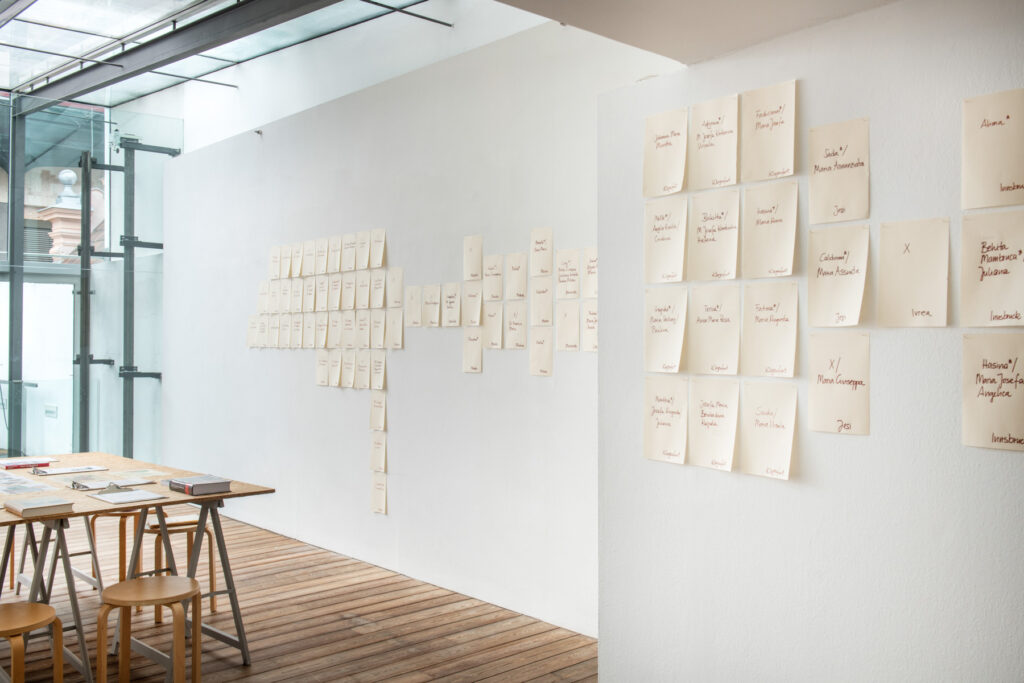
The intervention presents three case studies exhibited at the Kunsthaus, which engaged with archives through different approaches: from working on the legacy of the Meranese artist and photographer Christian Martinelli, to the educational project Alpitypes, which led to a contemporary reinterpretation of graphic archival sources, to the exhibition by Belinda Kazeem-Kamiński, which offered a decolonial reading of the memories preserved in archives. In these projects, archives were considered not only as places of preservation and protection but also as devices capable of generating new narratives.

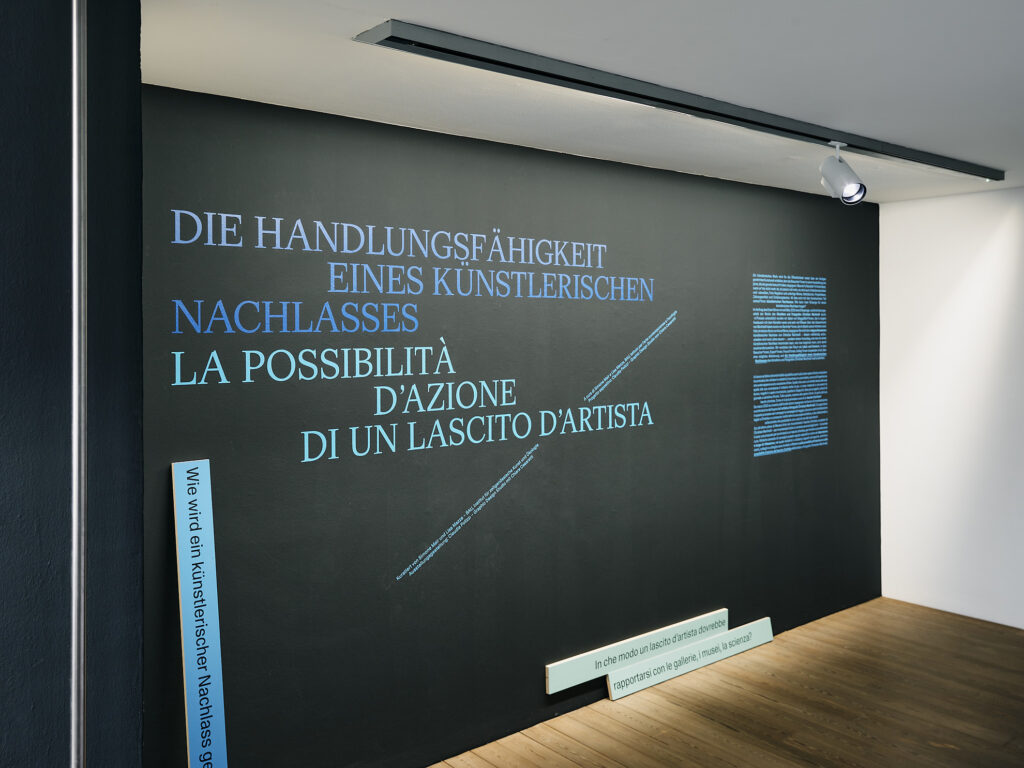
The possibility of action of an artist’s legacy. Curated by BAU. Photo by Davide Perbellini
Aerolectics – Belinda Kazeem-Kamiński. Curated by Lucrezia Cippitelli and Simone Frangi. Photo by Ivo Corrà
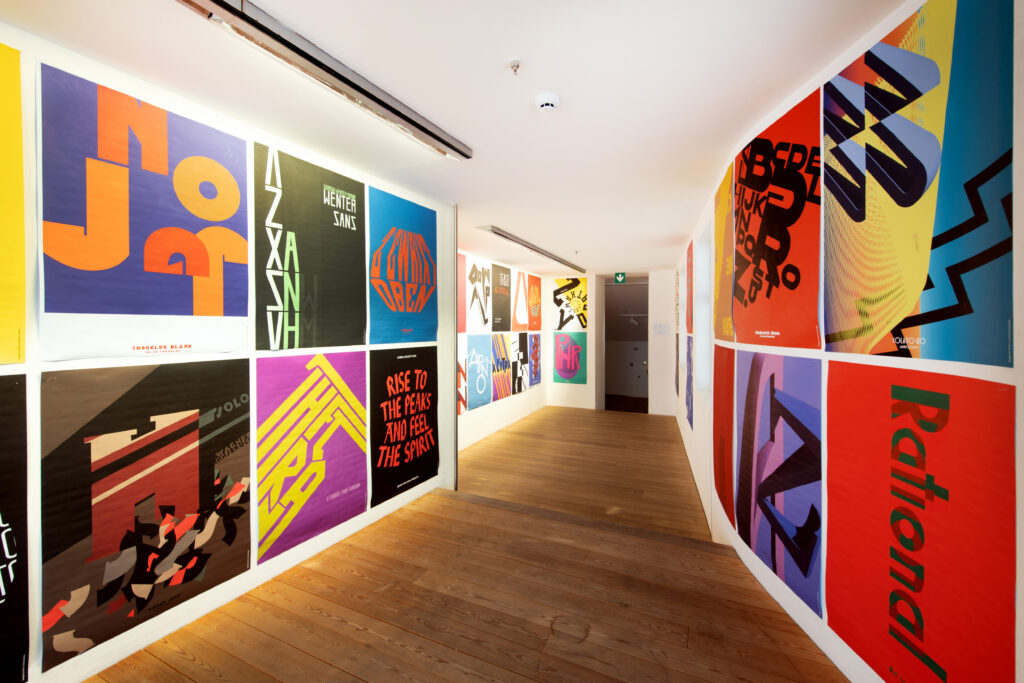
Alpitypes. Curated by Antonino Benincasa, Massimo Martignoni, Anna Zinelli. Photo by Ivo Corrà

Anna Zinelli

Anna Zinelli is an art historian (Ph.D.). She has published numerous articles in scientific and popular magazines and essays in various catalogs. Among her publications are: Socin and Carmassi (Tamassia Zinelli, Skira 2016), 1955–1968: Italian Artists at Documenta in Kassel (Mimesis 2017); Meeting Christian Martinelli (begegnen) (Schnitzer Zinelli, Esperia 2024). Since 2012, she has been collaborating on the MoRE project A Museum of Refused and Unrealised Art Projects and, since 2017, she has been a scientific collaborator, assistant to the management, and responsible for communication in the Italian language at Kunst Meran Merano Arte.

Fondazione Artieri 1852

349 5661183

View Organizer Website

Archivio Arte Contemporanea
329 4828149
https://www.stefanogiovanazzi.eu
info@stefanogiovanazzi.eu
Palazzo Pizzini

Piazza Malfatti, 27
Rovereto, TN 38068 Italy
+ Google Map

Andrea Benoni / Stefano Giovanazzi: Archivi di Comunità. Acts of transforming personal memories into shared memories

23 June ore 16:00 16:30 CEST

Presentation by the curators of the first edition of “Community Archives”:
Thirty-two encounters with artists, collectors, curators, art historians, archivists;
Inviting twenty-six institutions;
An exhibition in Rovereto;
Twelve guided tours of archives, foundations, and museums;
A logo and a manifesto designed by the artist Maurizio Nannucci.

Rovereto • Trento • Bolzano • Merano • Verona • Altivole
June 23 – July 31, 2026

The guests of the scheduled working days for the first edition of Community Archives will present specific study cases dedicated to the theme:

Acts of transforming personal memories into shared memories

Presentation

Community archives perhaps represent the last ‘utopia,’ a precious, complex, and at the same time fragile heritage, bearing witness to the ‘becoming’ of cultures, identities, and differences, of generations of living beings. Unlike big data concealed within data centers—collections of personal and collective data so vast and complex that they cannot be processed and decoded with traditional methods but only through algorithms and artificial intelligence, primarily for private use and exploitation—the utopia of community archives offers a different history of ideas.

Libraries and archives are seemingly composed of collections of material objects, such as printed documents, ancient and modern books, printed or handwritten music, sound or video recordings, graphic documents, drawings, engravings, photographs, artworks, collages, sculptures, digital works, technical inventions, objects from Wunderkammer—those theatrical rooms of curiosities (like the two-headed calf housed in the Civic Museum of Rovereto until the 1970s)—or minor materials: invitations, leaflets, ephemeral items. However, they always revolve around thoughts and reflections—by authors, publishers, producers, and disseminators—primarily: ‘immaterial objects,’ utopias in the strict sense. All together, they testify to the ‘wealth’ but also the ‘poverty’ of an impermanent social fabric in space and time, contaminated by multiple influences of nature and by cultural, historical, artistic, scientific, and technological factors. The variety of documents and testimonies that have reached us—preserved as genealogies, manuscripts, photographs, letters, maps, artworks, and everyday objects—tactile, visual, olfactory, auditory, and gustatory—allows the intertwining of very different disciplines. From this diversity, ‘community archives’ derive density and immeasurable potential.

Validation

The approach to an ever-expanding array of documents highlights the urgency of redefining the concepts of competence and validity, and at the same time calls for an integrated approach to the theory of knowledge. Private, unique collections represent the condensation of countless, indefinable memories and personal and interpersonal passions—materialization of Borges’ ‘Library of Babel’ in memory—while public libraries and archives play a role in preservation, organization, and providing easier access to mostly indexed documents. Documentary and testimonial resources often allow us to reconstruct personal and collective stories in great detail and with remarkable precision, which would otherwise be difficult to comprehend. The complexity of the knowledge contained in these archives requires ongoing personal and collective efforts—such as verifying sources, validating and attributing information, reading and interpreting—as well as continuous work of transcription, sometimes translation. When applied with the necessary care and attention, validation, attribution, protection, organization, study, and enhancement are tasks that future generations will be able to continue, even in contexts we cannot yet foresee but can only imagine.

Complexity beyond rituality

Community archives define the points of contact between disciplines and knowledge, reflecting the plurality of identities, memories, and unique practices that shape various social bodies. They are not merely repositories of documents but dynamic spaces where history, sociology, anthropology, archival science, and cultural studies intertwine to reshape the world and interpret traces of life — from the earliest testimonies to the most recent, from the essential to the complex. Their complexity and heterogeneity become evident when interpretation for investigative work requires integrating methodologies and perspectives: from qualitative analysis to statistical management, from participatory engagement with multiple stakeholders in evaluating critical and interpretive positions, to improving conservation and restoration techniques often adapted to specific climatic and environmental needs. Moreover, those working with community archives must address how to represent the multiplicity of narratives [Data Visualization] and the safeguarding of both singular and collective memory, often fragmented or subject to manipulation, sometimes marginalized. Consider, for instance, the countless objects in collections and museums originating from formerly colonized countries, whose country of origin, creators, or communities that valued and exchanged them are unknown: these represent a kind of ‘history of technique and art without names or places,’ driven by political events, domination, theft, or sometimes by excessive zeal or the desire to preserve and safeguard objects from neglect, time, and natural decay. Multistrategy and multidisciplinary approaches are increasingly essential to attempt to restore a hypothetical zero point of the object of thought — the moment of its emergence on the horizon of events: rediscovering the object at its origin allows us to understand its power and definition (bestimmung), and to reawaken the specific ‘state of the art’ in which it was born and established. An inverse process to ritualization. One last remark: all tools of knowledge can be conceived as means of social and cultural empowerment. In a time of rapid change, community archives serve as spaces of resistance against homogenization, questioning the concept of identity, and require new forms of knowledge and approaches to coexist social history, science and technology, aesthetic practices, sensitivity, desire and passion, ethics, and solidarity.

Genealogy and iconology

Paraphrasing Michel Foucault, we can consider genealogy as the art of uncovering the origins and hidden histories behind interpersonal and institutional practices, revealing how the present results from complex, often unsuspected historical processes, sometimes subject to distortions. Genealogies play a fundamental role in community archives because they help trace and document isomorphic lines or historical fractures, natural and cultural dynamics. Through the collection and analysis of information evaluated using tools from semiotics, iconography, genetics, anthropology, and other complex disciplines, archives sometimes enable us to trace the unfolding of relational, familial, and community forms, as well as sedentary or migratory dynamics, along with changes in ideologies and thought trajectories. Critical analysis of genealogies allows us to reconfigure, confirm, or refute personal and collective memories, reinforcing the delicate approach needed when dealing with such a sensitive subject as the space-time dimension of vital dynamics: autonomy and belonging, distance and continuity across generations. Genealogies present themselves as an ‘field’ still waiting to be explored from various perspectives—historical, anthropological, sociological, demographic, urbanistic, architectural, geographic, and scientific. The sources for such genealogical research must include grand mythic narratives, religions, philosophies, linguistic theories, and theoretical positions—all ‘texts’ that have reached us in the form of hypotheses, stories, essays, catalogs, registers of births and deaths, marriage records, statistical data from censuses, notarial acts (property or sales), laws and regulations, as well as personal or collective archives, both public and private. Seen as a whole, these states of thought often appear opaque, arid, unproductive, sometimes insubstantial or even harmful or devastating—fertile ground for the ‘banality of evil’ as Hanna Arendt describes. However, when realigned, reread, and integrated, they can serve as sources for a generative grammar capable of opening new fields of investigation and new perspectives. Similarly, a reflection on iconology as an immaterial genealogy of images allows us to go beyond markedly ideological and teleological obstacles, approaching the mental and symbolic spaces where thoughts and behaviors take shape.

Reality and social behaviors

We can consider community archives and vast genealogical collections as true ‘zones of flow’ between the imaginary and the real (in the sense given by Jacques Lacan): fundamental stages that allow us to attempt to traverse the material and immaterial heritage of individuals and communities, whether more or less articulated, intersecting or overlapping. These zones of flow sometimes present themselves as inaccessible due to the presence of barriers and obstacles—real or metaphorical—while at other times they open up to new vantage points, revealing unexpected horizons, valleys, and expanses that come into our view and consequently generate further opportunities for reflection and interpretation. It is up to us, through our actions, to live these landscapes as battlegrounds, theaters of war, conflict zones—or rather, as places of utopian transit, coexistence, and material and immaterial growth. Even language, like any other process, can become a tool of offense or an expression of resentment, or it can be used to mediate, welcome, safeguard, or simply to bear witness to gratitude.

Knowledge and participation

Archives and libraries, because they regularly address issues related to the preservation and sharing of knowledge, also play an active role in transforming the social fabric: a key point is that access to culture, information, and thought in its many forms cannot be considered neutral. It requires, over time, a transformation of roles and skills, as well as an active and stimulating relational and spatial approach. Community engagement initiatives, events, and collaborative projects enable open dialogue between researchers and the community, citizens and institutions. They strengthen the sense of belonging, transparency, and participation in a democratic process—transforming personal memories into history.

To survey, share, and design

Everyone recognizes the potential of private archives—those of artists, researchers, historians, and writers: the challenge is to connect this promise of the future with a more open, widespread relational fabric, capable of creating opportunities for its “shaping.” A crucial task is to identify these collections of thoughts or material objects and invite each individual to participate in expanding the boundaries of their actions, sharing their knowledge to collaboratively design new scenarios.


Andrea Benoni

Andrea Benoni is president of the Artieri Foundation. Former mayor of Calliano (TN), he was president of the Vallagarina Artisans Association for many years, and is the creator and organizer of numerous craft fairs, exhibitions, and events dedicated to the history of violin making in Trentino.

Stefano Giovanazzi

A graduate of the Rovereto Teacher Training Institute (TN) and the Trento State Art Institute, he attended the Academy of Fine Arts in Venice in the early 1980s, where he graduated in Painting under the artist Emilio Vedova. Founder and curator of AAC Archivio Arte Contemporanea in Rovereto, he has been president of the Numero Civico cultural association since 1994. In over thirty years of activity, he has curated hundreds of events related to contemporary art and thought. He has collaborated numerous times with artists, musicians, and writers, with museums and cultural institutions, academies, and with governments and governmental institutions. He has worked with Mario Airò, Stefano Arienti, Vincenzo Cabiati, Andrea Crociani, Francesco Dal Bosco, Eva Marisaldi, Chiyoko Miura, Liliana Moro, Fabio Polvani, Luca Quartana, Andrea Rabbiosi, Federico Tanzi-Mira, Grazia Toderi, Marco Vaglieri, Vedova Mazzei, and Francesco Voltolina; He has curated exhibitions featuring works by Rita Ackermann, Richard Ambleton, John Currin, Bruce Elder, Joseph Kosuth, Sean Landers, Sherrie Levine, Raymond Pettibon, Richard Prince, Jim Shaw, Michael Snow, Bill Viola, and Jeffrey Wallace. He has curated events in collaboration with the Italian Senate, the Ministry of Cultural Heritage and Activities, the Canadian Embassy, ​​the Vasco-Basque Government (Spain), the Instituto Cervantes de Cultura (Spain), the British Council (Great Britain), the French Ministry of Culture, the Institut Français (France), and the Goethe Institute (Germany). A genealogist, he is responsible for an extensive genealogical archive, „Trees and Leaves,“ which contains over a million genealogical positions.

Fondazione Artieri 1852

349 5661183

View Organizer Website

Archivio Arte Contemporanea
329 4828149
https://www.stefanogiovanazzi.eu
info@stefanogiovanazzi.eu
Palazzo Pizzini

Piazza Malfatti, 27
Rovereto, TN 38068 Italy
+ Google Map

Elena Bini: Sven Sachsalber. Mapping an artistic practice: a Museion research project

2 July ore 18:00 18:30 CEST

Sven Sachsalber (Silandro, 1987 – Vienna, 2020) was a prominent artist who, with irony and determination, worked across various artistic media, and whose evolution Museion closely followed from the very beginning. Recognizing the regional and international importance of his work, the museum decided, in the year following his death, to systematically map his oeuvre, ensure its preservation, improve its accessibility, and reconstruct the network of relationships surrounding the artist. The project was carried out in two main phases: the first focused on his years of study in London and his artistic activities, as well as his network of relationships across Europe (2009–2013); the second concentrated on the years spent in New York (2014–2020). This multi-year research initiative (2021–2025), funded by the German Cultural Division of the Autonomous Province of Bolzano, was initiated and directed by Museion in collaboration with BAU – Institute for Contemporary Art and Ecology, in ongoing exchange with Sachsalber’s family. The research concluded with a public presentation (December 6, 2025 – June 21, 2026), accompanied by a publication designed by Studio Claudia Polizzi, and the online release of the collected data. The exhibition and publication serve as reflective pauses that continue the ongoing research on the artist, acting as moments of suspension and reorganization to further explore his work across the coming years and decades. They are active storytelling efforts aimed at keeping alive the memory and legacy of the artist. Mapping an artistic practice: Museion’s research project exemplifies how working with (and engaging with) an artist’s legacy contributes to the preservation of cultural heritage within a territory, fostering new interpretations and international connections.

Elena Bini

Elena Bini is Head of Collections and Archives at Museion – Museum of Modern and Contemporary Art in Bolzano and coordinates the Museion Passage projects. She graduated in Cultural Heritage Conservation from the University of Udine, developing a specific interest in the protection, promotion, and documentation of contemporary artistic heritage. Before joining Museion, she taught art history and cultural mediation, collaborating freelance with museums, institutions, and artistic projects in South Tyrol. She has worked at Museion since 2000, where she has held various roles in art mediation, collection management, and the development of archiving, cataloging, and promotion projects. Her work focuses on the conservation and management of the museum’s holdings, while also promoting research practices and archive accessibility as fundamental tools for the understanding and dissemination of contemporary art.

Fondazione Artieri 1852

349 5661183

View Organizer Website

Archivio Arte Contemporanea
329 4828149
https://www.stefanogiovanazzi.eu
info@stefanogiovanazzi.eu

Palazzo Pizzini

Piazza Malfatti, 27
Rovereto, TN 38068 Italy
+ Google Map

Mariarosa Mariech: Archives of Italian Underground at Mart

with Duccio Dogheria

6 July ore 17:45 18:30 CEST

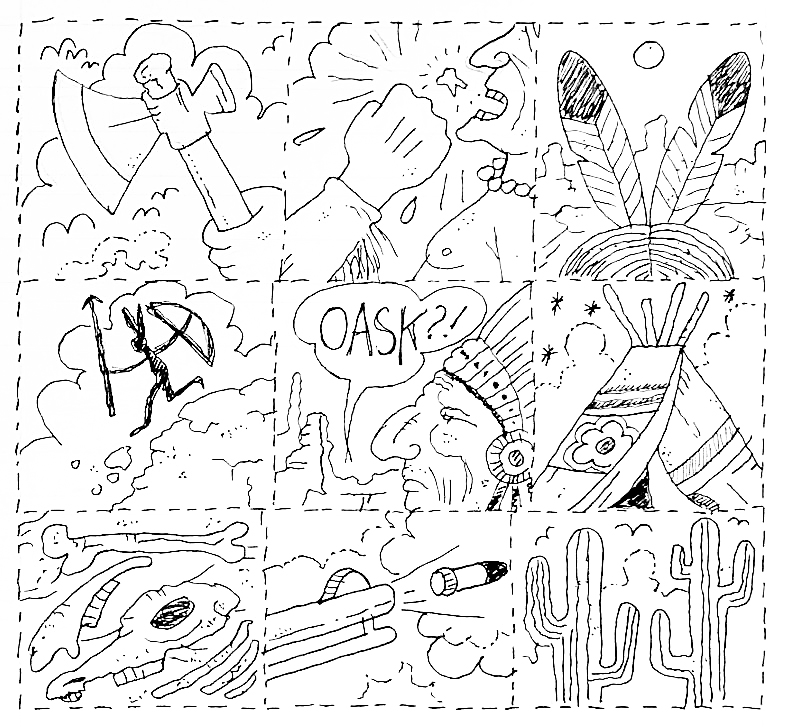
The Mart’s Archivio del ‘900 [20th-Century Archives] are recognized by the international scholarly community for their extraordinary archival and book heritage dedicated to Futurism, art criticism, architecture, and the neo-avant-garde movements of the late 20th century. In recent years, the Mart has initiated a systematic acquisition program to document the aesthetics of Italian countercultures: a time span spanning the 1960s to the early 2000s, from the Beat Movement to the Luther Blissett Project, through the Metropolitan Indians, punk, and cyberpunk. Presented here to the public for the first time in all their complexity, these materials include collections of rare uniqueness in the national panorama: underground magazines from the 1960s and 1970s from the Archivio di Nuova Scrittura collection, an exceptional corpus of music fanzines (donations from Pautasso, Piccolrovazzi, and Assenzio), the complete documentation of the first Italian exhibition dedicated to fanzines (1984, donated by curator Luciano Trevisan Fricchetti), posters from legendary hardcore punk venues such as Virus and Helter Skelter, and the personal archives of “Pablo” Echaurren, Giancarlo Pavanello, Piermario Ciani, Luther Blissett, and Gianluca Lerici, aka Prof. Bad Trip. The meeting will be led by Duccio Dogheria, head of the historical archives, and Mariarosa Mariech, head of the Mart library.

Pablo Echaurren, drawing from the notebook Oask?! Facciamo un giornale anormale [Oask ?! Let’s make an unusual newspaper], ink on paper, 1977. Mart, Archivio del ‘900, Pablo Echaurren’s documents.

Mariarosa Mariech

Mariarosa Mariech holds a degree in Literature, with a focus on Modern Studies; she has worked at the Provincial Superintendence managing historic book collections; since 2005, she has been working at the Mart Library, which she has been coordinating as the head since 2012. Over time, she has overseen various Civil Service projects, while also hosting interns, volunteers, and external collaborators.

Fondazione Artieri 1852

349 5661183

View Organizer Website

Archivio Arte Contemporanea
329 4828149
https://www.stefanogiovanazzi.eu
info@stefanogiovanazzi.eu

Palazzo Pizzini

Piazza Malfatti, 27
Rovereto, TN 38068 Italy
+ Google Map

Duccio Dogheria: Archives of Italian Underground at Mart

with Mariarosa Mariech

6 July ore 17:00 17:45 CEST

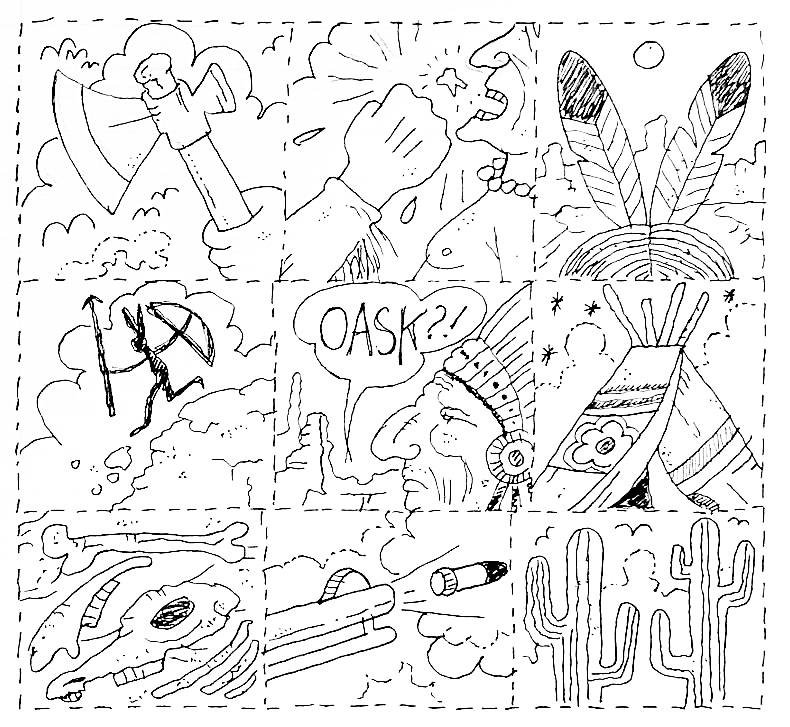
The Mart’s Archivio del ‘900 [20th-Century Archives] are recognized by the international scholarly community for their extraordinary archival and book heritage dedicated to Futurism, art criticism, architecture, and the neo-avant-garde movements of the late 20th century. In recent years, the Mart has initiated a systematic acquisition program to document the aesthetics of Italian countercultures: a time span spanning the 1960s to the early 2000s, from the Beat Movement to the Luther Blissett Project, through the Metropolitan Indians, punk, and cyberpunk. Presented here to the public for the first time in all their complexity, these materials include collections of rare uniqueness in the national panorama: underground magazines from the 1960s and 1970s from the Archivio di Nuova Scrittura collection, an exceptional corpus of music fanzines (donations from Pautasso, Piccolrovazzi, and Assenzio), the complete documentation of the first Italian exhibition dedicated to fanzines (1984, donated by curator Luciano Trevisan Fricchetti), posters from legendary hardcore punk venues such as Virus and Helter Skelter, and the personal archives of “Pablo” Echaurren, Giancarlo Pavanello, Piermario Ciani, Luther Blissett, and Gianluca Lerici, aka Prof. Bad Trip. The meeting will be led by Duccio Dogheria, head of the historical archives, and Mariarosa Mariech, head of the Mart library.

Pablo Echaurren, drawing from the notebook Oask?! Facciamo un giornale anormale [Oask ?! Let’s make an unusual newspaper], ink on paper, 1977. Mart, Archivio del ‘900, Pablo Echaurren’s documents.

Duccio Dogheria

He is responsible for the ‘900 Archive at the Mart, where he has been working since 2009, primarily dealing with artist archives from the second half of the 20th century, experimental publishing, and the museum’s digital library. His publications include Internet Archive: Unofficial Guide to the World’s Most Innovative Digital Library (2024), Luther Blissett: Bibliography of a Psychological Warfare (2021, with Silvano Zingoni), Banksy (2020), Pirates and Fake Editorials in 1970s Italy (2018), and Street Art: History and Counterhistory, Techniques and Protagonists (2015). He has curated several exhibitions, mostly focused on the connections between avant-garde and neo-avant-garde art; he has collaborated with magazines such as “Art e Dossier,” “Exibart,” “L’Illustrazione,” “Pretext,” “Charta,” “International Yearbook of Futurism Studies,” “Ricerche di s/confine,” “Piano B,” and “Studi di Memofonte,” mainly writing articles related to the history of graphic design, illustration, and underground publishing.

Fondazione Artieri 1852

349 5661183

View Organizer Website

Archivio Arte Contemporanea
329 4828149
https://www.stefanogiovanazzi.eu
info@stefanogiovanazzi.eu

Palazzo Pizzini

Piazza Malfatti, 27
Rovereto, TN 38068 Italy
+ Google Map